12 Environmental Nonprofit Video Examples (and Why They Work)
12 real environmental and conservation nonprofit videos, from Conservation International to Greenpeace and WWF, with links and why each one works.

Environmental nonprofits have a hard storytelling problem: the harm is slow, the places are far away, and the "beneficiary" is often a forest, a reef or a species that can't give an interview. The organizations that break through solve that problem with a clear creative device. Below are 12 real environmental and conservation videos, each linked to the source, with a short note on the technique that makes it work and how a development or comms team can borrow it.
Key facts
- US giving to environment and animal causes reached $24.57 billion in 2025, up 11.0% year over year (Giving USA 2026).
- Conservation International's "Nature Is Speaking" series has been viewed more than 100 million times in 10 languages (Conservation International).
- Greenpeace's "Rang-tan" passed 30 million online views after UK broadcast clearance was refused (Greenpeace UK).
- The five techniques that recur below: give nature a voice, use humor with one easy action, animate what cameras can't film, explain a system in one sitting, and put real people on camera in places they love.
12 environmental nonprofit video examples
1. Conservation International — "Nature Is Speaking: Julia Roberts is Mother Nature" (2014)
Watch the video. Julia Roberts voices Mother Nature over sweeping footage, delivering the line "Nature doesn't need people. People need nature." The series, creative-directed by Lee Clow, added Harrison Ford as the Ocean, Edward Norton as the Soil and Robert Redford as the Redwood (Sustainable Brands).
Why it works: it flips the point of view. Instead of people talking about nature, nature talks to people, which makes the stakes personal in under two minutes. Episodic releases gave the campaign a reason to come back every week.
2. Rainforest Alliance — "Follow the Frog" (2012)
Watch the video. A comic, escalating misadventure about a man who quits everything to save the rainforest, before the punchline: you don't have to. Just look for the green frog seal when you shop. It won Best Nonprofit Video at the 2013 YouTube DoGooder Awards (Nonprofit Marketing Guide).
Why it works: humor lowers defenses, and the ask is almost effortless. When your call to action fits into a supporter's existing routine, you get far more action than a guilt-led appeal.
3. Greenpeace — "Rang-tan: the story of dirty palm oil" (2018)
Watch the video. A picture-book animation in which a young orangutan hides in a girl's bedroom because her rainforest home is being burned for palm oil. Clearcast refused it for UK TV, and the film went on to more than 30 million online views (Greenpeace UK).
Why it works: animation shows what a camera can't, and a child's point of view keeps a heavy topic watchable for families. Strong distribution planning turned a setback into reach.
4. Greenpeace UK with Aardman — "Turtle Journey" (2020)
Watch the video. A stop-motion turtle family tries to get home through oceans damaged by plastic, oil drilling and overfishing, voiced by Olivia Colman, Helen Mirren, David Harbour and others (Greenpeace).
Why it works: a family story carries a policy ask (ocean protection) without a lecture. Characters give viewers someone to root for.
5. Greenpeace — "LEGO: Everything is NOT awesome" (2014)
Watch the video. A LEGO Arctic slowly drowns in oil to a slowed, mournful cover of a familiar song. EcoWatch reported nearly six million views and more than one million petition signatures before LEGO announced it would end its Shell partnership (EcoWatch).
Why it works: one striking visual metaphor, one target, one petition. Advocacy video wins when the ask is specific.
6. The Story of Stuff Project — "The Story of Stuff" (2007)
Watch the video. Annie Leonard walks through how goods are extracted, made, sold and thrown away, using simple line animation, in about 20 minutes (Story of Stuff).
Why it works: a single trusted presenter and clean visuals make a complex system easy to follow. It proves long-form explainers still earn attention when they teach something people want to understand. It spun off an entire series.
7. Earthjustice — "Because the Earth Needs a Good Lawyer"
Watch the video. A short brand spot built on Earthjustice's tagline, positioning its environmental attorneys as the legal backbone of the movement.
Why it works: a specialist mission (litigation) gets compressed into one memorable line. If donors struggle to explain what you do, a brand line plus a short spot is the fix.
8. WWF with Silverback Films and Netflix — "Our Planet" (2019)
Watch episode one. The David Attenborough series took four years, 50 countries, 3,500+ filming days and 600+ crew, and every episode is free on YouTube (WWF-UK).
Why it works: a nonprofit co-created premium content and then gave it away. Free, full-length distribution turned a broadcast series into a long-term education asset.
9. National Park Service and National Park Foundation — "Find Your Park" (2015)
Watch the video. Launched ahead of the Park Service centennial, the campaign used ambassadors like Bill Nye and Michelle Obama sharing personal park stories, and invited the public to post their own (NPS).
Why it works: it broadened who sees themselves in the mission (urban, historic and cultural parks, not only wilderness) and made supporters co-creators through a hashtag.
10. The Climate Reality Project — global campaign (Happy Productions)
We filmed Al Gore's keynote and on-the-ground stories across two countries for The Climate Reality Project, driving 36M+ organic reach. Read the Climate Reality case study.
Why it works: one flagship moment (a keynote) cut into many short pieces that travel on social, each tied to a human story.
11. GoodPower (formerly ACE) — human stories of climate change (Happy Productions)
A 105-video series documenting climate impact in four regions of the US, with 150,000+ views on the rural energy series alone. Read the GoodPower case study.
Why it works: local voices make climate change concrete. A farmer or a neighbor after a disaster persuades people that statistics never reach.
12. Solar United Neighbors — a social-first video library (Happy Productions)
45 videos filmed across multiple states by local storytellers, giving a one-person social team a ready-made library. Read the Solar United Neighbors case study.
Why it works: volume plus authenticity. Members explaining why they went solar outperform polished ads on social, and a library lets a small team post consistently.
What environmental nonprofits can borrow
- Pick one device. A voice for nature, a character, a metaphor or a real person. Don't try all four in one video.
- Make the ask small and specific. Sign, switch, look for a label, give monthly. "Save the planet" is not an ask.
- Use animation for the invisible. Carbon, supply chains and future scenarios are hard to film. Animate them, then cut to real people for proof.
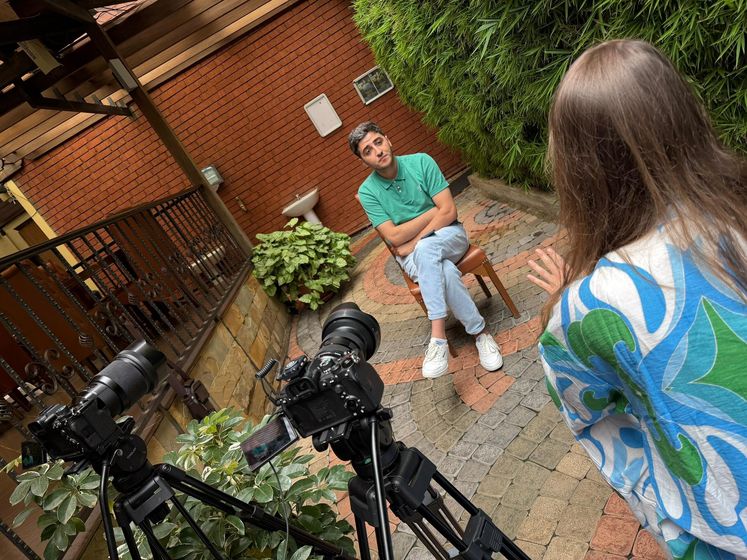
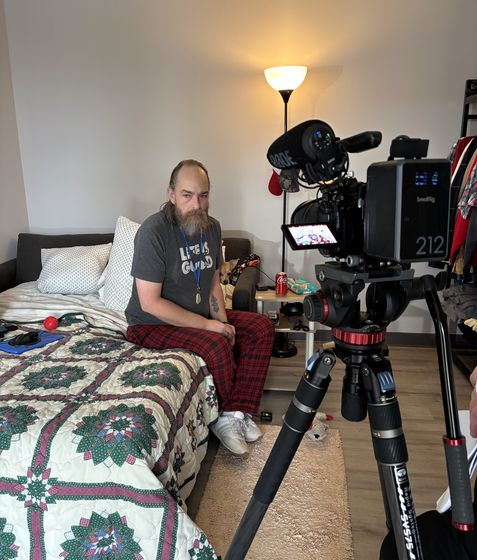
- Film locally, publish globally. Members, volunteers and frontline communities make the most credible messengers. A vetted local crew captures them without flying a team in.
- Plan distribution before the shoot. Map which cut goes to YouTube, Reels, email and your year-end appeal. Our nonprofit video distribution playbook covers the full rollout.
For more examples across causes, see our main list of nonprofit video examples and the best fundraising video examples. Awareness-day planners can also use the World Environment Day video playbook.
Make your environmental story land
Happy Productions produces campaign, documentary and social-first video for environmental nonprofits, with 20,000+ vetted storytellers in 130+ countries and campaigns that have earned over 1 billion views. Explore our nonprofit video production services or browse all case studies.
Book a free 15-minute consult and we'll map your next environmental campaign video, from concept to distribution.
Not sure where to start?
Book a free strategy call. We'll workshop a video concept for your nonprofit — no charge, no pitch deck.
Book my free callReady to put your story on screen?
Tell us what you're working on. In 15 minutes we'll sketch the video with you — what to film, who to put on camera, and where it should run.