Donor Retention Statistics 2026: Benchmarks Every Nonprofit Should Know
The latest donor retention statistics for nonprofits: overall, first-time, repeat and monthly donor rates, plus what research says lifts retention. Sourced.

Most nonprofits lose more than half their donors every year. The numbers below are the latest available as of October 2026, each linked to its source, so your development team can benchmark your own file and make the case for retention to your board.
Key donor retention statistics (2026)
- Overall donor retention: 43.3% in 2025, up slightly from 43.1% (Fundraising Effectiveness Project).
- Donor counts fell 3.6% in 2025, even as dollars rose an estimated 5.0%, the strongest revenue growth in five years (FEP).
- Repeat donors carry the sector: repeat retained donors contribute about 61% of all dollars (FEP, Q1 2026).
- New online donors are retained only 24% of the time, versus 66% for prior online donors (M+R Benchmarks 2026).
- 71% of monthly donors are still giving after 12 months, and 54% after two years (M+R Benchmarks 2026).
- A thank-you call lifts first-time donor retention from about 33% to 41%, and to 58% with more than one call in 90 days (Bloomerang).
- December brings in roughly 18% of annual giving, and more than 36% of revenue arrives in Q4 (Blackbaud Institute).
- GivingTuesday 2025 raised $4.0 billion in the US, up 13% (GivingTuesday).
The big picture: fewer donors, larger gifts
Americans gave an estimated $617.20 billion in 2025, up 5.7% in current dollars, and individuals gave $394.2 billion of it (Giving USA 2026). Yet the number of people giving keeps shrinking. The Fundraising Effectiveness Project's 2025 report found donor counts down an estimated 3.6% while dollars rose 5.0%. FEP notes donor counts have fallen every year since 2021.
That means growth now depends on keeping and upgrading the donors you already have. Each lost donor is harder to replace than the last.
Retention rates by donor type
Overall retention
FEP reports overall retention rose from 43.1% to 43.3% in 2025. Put plainly: out of every 100 donors who gave last year, about 57 did not give again. FEP attributed the small improvement mainly to repeat donors, while first-time donor retention was flat at best.
First-time donors
First-time donors are the leakiest part of most files. In M+R's 2026 Benchmarks, new online donors were retained only 24% of the time. EverTrue's analysis of 275,000 first-time donors at 50 schools found 62% did not give again within three years.
Repeat donors
Once a donor gives twice, the picture changes. M+R found prior online donors were retained at 66%. In FEP's Q1 2026 data, repeat retained donors contributed about 61% of all dollars and grew their giving more than 7% year over year, while recaptured lapsed donors' dollars jumped 19.7%.
Monthly donors (sustainers)
Monthly giving is the strongest retention tool in the sector. M+R found 71% of sustainers were still active after 12 months and 54% after two years, and monthly giving made up 27% of online revenue. Neon One's recurring giving research reported recurring donors stay an average of 7.71 years versus 1.68 years for one-time donors. See our monthly giving sustainer video guide for how to recruit and keep them.
What moves retention: thank-yous and proof of impact
The research points to two levers any nonprofit controls: how fast and personally you thank donors, and whether you show them what their gift did.
- Phone calls work. In Bloomerang's study of 1.9 million donors across 3,729 nonprofits, first-time donors who got no call within 90 days were retained about 33% of the time. One call raised that to 41.24%; more than one call raised it to 58.21%.
- Impact reports matter. In Penelope Burk's donor research, as summarized in Nonprofit Quarterly, 93% of donors said they would definitely or probably give again to a charity that thanked them promptly and personally and later sent a meaningful report on the program they funded.
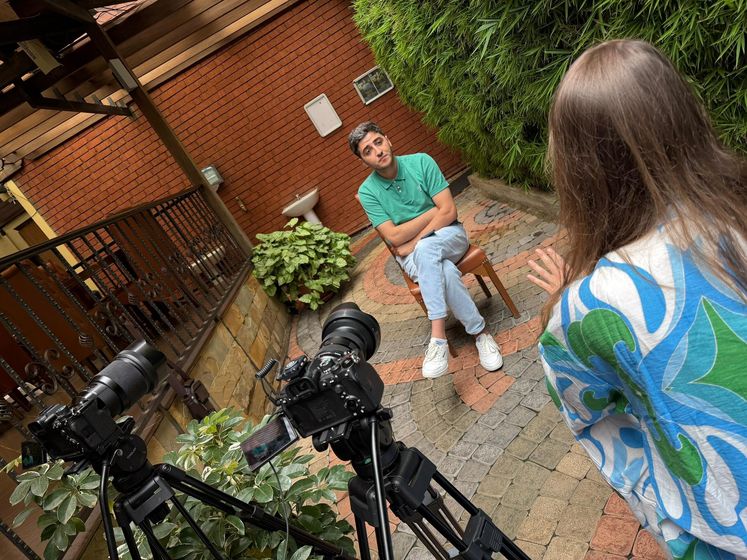
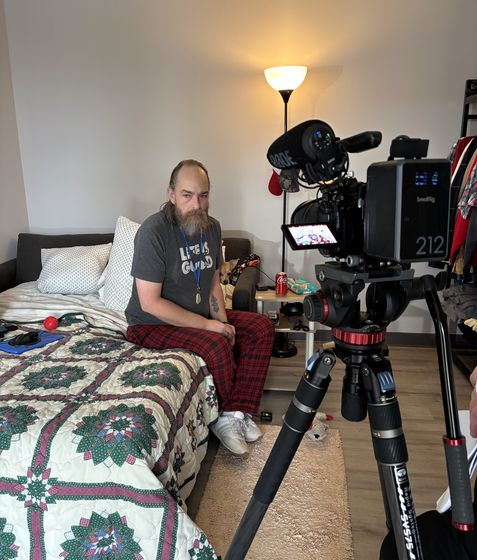
- Proof needs to be seen. A written report is easy to skim past. A short video of the family, classroom or clinic a donor funded is the fastest way to show that the gift worked, and it can be dropped into the thank-you email, the impact report and the next appeal.
Timing: when retention is won or lost
Retention depends on what happens between gifts, and the calendar is lopsided. Blackbaud Institute data on 2025 giving shows December alone accounts for roughly 18% of annual giving and more than 36% of revenue arrives in Q4. GivingTuesday 2025 drew $4.0 billion from 19.1 million US donors.
So a large share of your new donors arrive in the last weeks of the year, and whether they give again is decided over the following year. Plan the stewardship for those year-end donors now, before they give: a thank-you within days, an impact update by spring and a mid-year proof point. Our year-end giving video calendar lays out the timing.
How to use these benchmarks
- Calculate your own rates. Pull donors who gave last year and count how many gave again this year. Split first-time, repeat and monthly donors.
- Compare by segment, not just overall. A 45% overall rate can hide a 20% first-time rate.
- Fix the first 90 days. Bloomerang's data shows the first gift's follow-up is where the biggest gains are.
- Move donors to monthly. Sustainers are retained at far higher rates than one-time donors.
- Report impact on a schedule. Tie updates to dates donors already expect: the thank-you, the annual report, the year-end appeal.
For the full playbook, read our donor retention video playbook, our guide on how to show donors their impact and our list of donor stewardship ideas.
A note on the data
FEP changed its methodology in 2026, and its quarterly figures are year-to-date, so a Q1 retention rate is not comparable to an annual rate. M+R measures online giving only. Use each figure for what it measures, and benchmark your own file over several years.
Turn retention data into a plan
Happy Productions builds proof systems for nonprofits, foundations and NGOs: short impact videos and live impact reports timed to your thank-you, board meeting, gala and year-end appeal, so donors see what their gift did. Our clients include Kiva, Heifer International and Lions Clubs International. See our case studies or fundraising video work, and book a free consultation to map your donor stewardship calendar.
Not sure where to start?
Book a free strategy call. We'll workshop a video concept for your nonprofit — no charge, no pitch deck.
Book my free callReady to put your story on screen?
Tell us what you're working on. In 15 minutes we'll sketch the video with you — what to film, who to put on camera, and where it should run.