Nonprofit Video Production Services: What's Included (Complete 2026 Guide)
Learn exactly what's included in professional nonprofit video production services — strategy, filming, editing, and delivery. Complete 2026 guide.
When nonprofits come to us asking about nonprofit video production services, the first question is almost always the same: "What exactly do we get?" It's a fair question — video production can feel like a black box, especially if your organization hasn't worked with a professional video team before. This guide breaks down everything that's included in professional nonprofit video production services, from the first strategy call to final file delivery, so you know exactly what to expect — and what to demand — from any video partner you hire.
At Happy Productions, we've spent years creating video content for nonprofits across the globe — from climate advocacy campaigns with The Climate Reality Project to donor registry drives for DKMS and global shoe drives for Soles4Souls. That experience has taught us what works, what gets left out, and what separates a service package that delivers real results from one that leaves your organization with a hard drive full of footage and no strategy.
What Are Nonprofit Video Production Services?
Nonprofit video production services are end-to-end creative and technical services designed to help mission-driven organizations communicate their impact through video. Unlike standard commercial video production, nonprofit video production is built around storytelling that inspires action — whether that's donations, volunteer signups, advocacy, or awareness.
The full scope of these services typically falls into three phases:
- Pre-production: Strategy, scripting, casting, location scouting, and scheduling
- Production: Filming, directing, and capturing all on-camera content
- Post-production: Editing, color grading, sound design, graphics, and delivery
But the best nonprofit video production services go beyond these three phases. They include strategic planning before a camera is ever turned on, and ongoing content support after delivery. Let's dig into each stage in detail.
Pre-Production: Strategy and Planning (Often Overlooked, Always Critical)
Pre-production is where the work actually starts — and where most nonprofits get shortchanged by cheaper providers who skip it. A thorough pre-production phase is what separates a video that raises $200K in a campaign from one that gets 40 views and is forgotten.
Discovery and Strategy Sessions
Before any script is written or shot list planned, a professional video production partner will run discovery sessions with your team. This means understanding your mission, target audience, campaign goals, key messages, and how the video will be distributed. Strategy isn't a luxury — it's the foundation of every effective video.
At Happy Productions, every project begins with a deep-dive strategy session. We want to know: Who is watching this? What do we need them to feel? What do we need them to do after watching? Those answers shape every creative decision that follows.
Scriptwriting and Storyboarding
Professional nonprofit video production services include scriptwriting by experienced writers who understand cause-driven communication. This isn't about writing dialogue — it's about constructing a narrative arc that moves an audience from awareness to empathy to action.
Storyboarding translates the script into a visual plan: which shots will be used, in what order, with what camera movements. A solid storyboard means no guesswork on the day of the shoot — and no expensive surprises.
Casting and Talent Coordination
Who appears in your video matters enormously. Pre-production includes identifying and coordinating beneficiaries, staff, donors, or volunteers who will appear on camera. For nonprofits working with vulnerable populations, this also means navigating consent protocols, which professional teams handle routinely.
Location Scouting and Permitting
Great nonprofit video often requires filming in multiple locations — field sites, offices, events, communities. Pre-production includes scouting and securing those locations, obtaining any necessary filming permits, and planning logistics so your shoot day runs smoothly.
Shot Lists and Call Sheets
Every shoot day is governed by a detailed shot list (every individual shot that needs to be captured) and a call sheet (a production schedule listing who needs to be where, and when). These documents are the difference between a shoot that finishes on schedule and one that runs over by three hours.
Production: What Happens During the Shoot
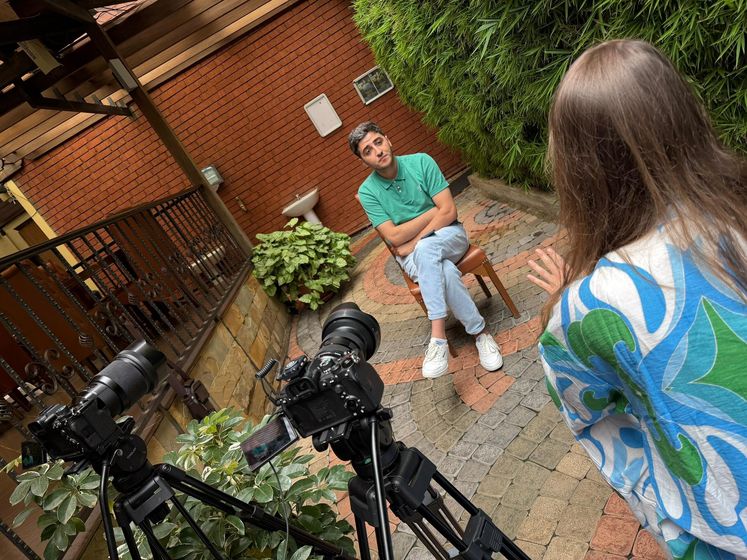
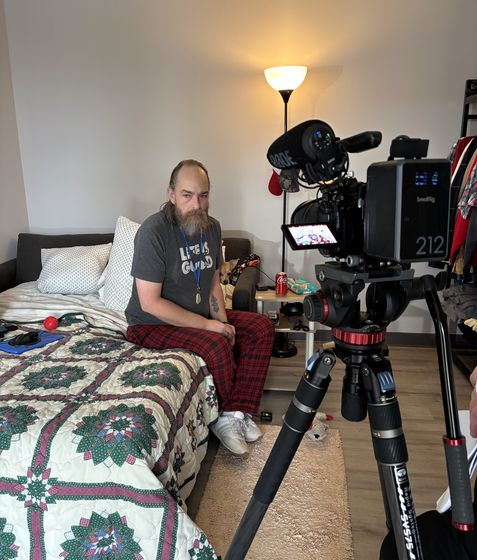
The production phase is what most people imagine when they think of video production — cameras, lights, crew. But what's included in a professional production day goes well beyond showing up with a camera.
Professional Camera and Lighting Equipment
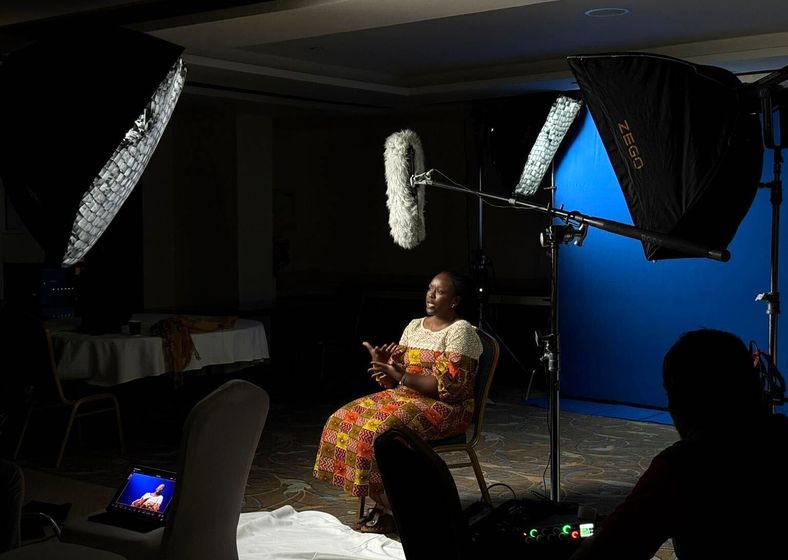
Cinema-quality cameras, lenses, and lighting rigs are standard for professional nonprofit video production. This matters because well-lit, sharp footage communicates credibility and competence — which directly affects how donors and supporters perceive your organization. A shaky iPhone video, regardless of the story it tells, signals a lack of resources and professionalism.
Sound Recording
Audio quality is even more critical than video quality. Audiences will tolerate imperfect visuals before they'll tolerate bad audio. Professional productions use lavalier microphones for interviews, boom mics for ambient scenes, and dedicated sound recorders — not the built-in microphone on a camera.
Direction
A director is not the same as a camera operator. The director shapes the emotional quality of what's being filmed — guiding interviews, directing action, making real-time creative decisions to ensure the footage will edit together into a compelling story. This is a specialized skill that separates professional video production from amateur work.
B-Roll and Supplemental Footage
B-roll is the supporting visual content that plays over narration or interviews — your team in action, beneficiaries at work, community scenes, close-up details. A professional production schedule includes dedicated time for capturing rich b-roll, because it's what makes a video feel alive rather than like a static talking-head interview.
Multi-Day Shoots for Complex Stories
For campaigns like our work with The Climate Reality Project, production spanned multiple locations and days to capture the full scope of their global work. Complex stories require production schedules that match their ambition. Any nonprofit video production company worth working with will scope a production timeline appropriate to your story — not just squeeze everything into one rushed shoot day.
Post-Production: Where Good Footage Becomes Great Video
Post-production is where the raw ingredients become the final product. For nonprofits, this phase is often where the most value is added — and where the most corners are cut by lower-quality providers.
Video Editing
Professional editing is far more than cutting clips together. It's pacing, structure, emotional rhythm, and storytelling. A skilled editor can take hours of interview footage and find the four minutes that will move someone to tears — and to donate. Editing also includes:
- Assembly edit (rough cut for client review)
- Fine cut based on feedback
- Final cut after approval
Most reputable nonprofit video production services include multiple rounds of revision in their packages. At Happy Productions, we build in structured feedback rounds to ensure the final product aligns perfectly with your vision.
Color Grading
Color grading is the process of adjusting the color, contrast, and tone of every shot in the film to create a consistent visual style. It's what gives professional videos that "cinematic" look — warm, rich, intentional. Ungraded footage looks flat and amateurish by comparison.
Sound Design and Music
Sound design includes noise reduction, audio leveling, dialogue cleanup, ambient sound, and sound effects. Music selection and mixing is equally important — the right score underneath an impact story can triple its emotional impact. Professional productions license music appropriately (using royalty-free or licensed tracks) so your video can be used anywhere without copyright issues.
Motion Graphics and Titles
Lower-third titles (name identifiers), opening and closing title cards, data visualizations, animated logos, and other motion graphics elements are part of a complete post-production package. These elements add professionalism and clarity — and they're often where a nonprofit's brand identity shows up most prominently in the video.
Captions and Accessibility
Professional nonprofit video production services include closed captions for accessibility — both as a compliance and an equity issue, and because captions dramatically increase video watch time on social media platforms where users scroll with sound off. A complete deliverable includes an SRT caption file alongside the video.
Multiple Platform Cuts
The full-length version of your video is rarely the only thing you need. A comprehensive package includes:
- Full-length hero video (2–5 minutes)
- 60-second social cut
- 30-second social cut
- 15-second teaser/ad cut
- Vertical (9:16) versions for Instagram Reels, TikTok, and Stories
This is an area where Happy Productions sets itself apart. Our subscription-based service model for nonprofits includes unlimited video deliverables — meaning your organization can request 100+ short-form social cuts and 10+ long-form videos every month, not just one video per project. That kind of sustained video output is what actually builds audience and drives results over time.
The Different Types of Nonprofit Video Production Services
Understanding what types of videos are available helps nonprofits build a content strategy rather than just commissioning one-off projects. The most effective nonprofit video production strategies include multiple formats working together.
Mission and Brand Videos
The cornerstone of nonprofit video content. A mission video answers "Who are you, what do you do, and why does it matter?" in 2–3 minutes. This is typically the first video on your homepage, in donor decks, and at events. It should be the highest-production piece in your portfolio.
Impact and Beneficiary Story Videos
These are the most powerful fundraising tools in nonprofit video. A single beneficiary story — told authentically, with professional production quality — can outperform years of newsletter appeals. Our work on the DKMS donor registry campaign centered on real patient stories that drove measurable increases in donor registrations globally.
Fundraising Campaign Videos
Built around a specific campaign goal, fundraising videos create urgency and make a direct ask. They typically run 90 seconds to 3 minutes, combine emotional storytelling with clear statistics, and close with a specific, compelling call to action.
Documentary-Style Videos
For complex issues or long-term impact stories, short documentary formats (8–20 minutes) allow deeper exploration. These are powerful for major donor cultivation, foundation grant applications, and awareness campaigns. They require the most production investment but deliver the highest-prestige content.
Volunteer and Recruitment Videos
Showing potential volunteers exactly what the experience looks and feels like dramatically increases recruitment rates. These videos are typically 1–2 minutes and focus on the human experience of volunteering — the relationships, the impact, the meaning.
Event Coverage and Highlights
Capturing annual galas, awareness walks, community events, or conferences gives organizations reusable content and documents impact over time. Event coverage packages typically include a highlight reel, speaker clips, and social-ready short cuts.
Social Media Video Content
Short-form content for Instagram Reels, TikTok, YouTube Shorts, and LinkedIn is increasingly critical for nonprofit marketing. These 15–60 second pieces are fast to produce from existing footage and maintain constant audience engagement between major campaigns. For nonprofits that partner with Happy Productions on our subscription model, we deliver this kind of content on a weekly basis.
Educational and Training Videos
For nonprofits that need to train volunteers, educate communities, or explain complex issue areas, educational videos provide scalable, reusable communication. These can replace hours of live training and live on your site as permanent resources.
What to Look for in a Nonprofit Video Production Company
Not all video production services are created equal. When evaluating providers for your organization, consider these factors:
Nonprofit-Specific Experience
General commercial video production companies are not the same as nonprofit-specialized teams. Working with vulnerable communities requires sensitivity and ethical judgment. Understanding fundraising psychology is a specialized skill. Knowing how to navigate consent with beneficiaries matters enormously. Look for a partner with a portfolio deep in nonprofit and cause-driven work — not just a reel of car commercials and product launches.
Strategic Involvement, Not Just Execution
The best video production partners don't just show up and film what you tell them to. They push back, ask hard questions, and bring strategic thinking to the project. If a company is only focused on getting paid to execute a brief rather than helping you define what that brief should be, you're not getting the full value of a true creative partner.
Global Reach and Production Scale
For organizations operating internationally, the ability to produce content across multiple locations and countries is a significant differentiator. Our work on the Soles4Souls global campaign required production across multiple continents — something that requires real infrastructure and experience, not just a local freelancer with a nice camera.
Transparent Deliverables and Licensing
Ensure any contract clearly specifies what you're getting: number of deliverables, revision rounds, file formats, music licensing, and whether you receive the raw footage. Some companies retain ownership of raw footage — a practice that limits your flexibility and should be avoided.
Track Record of Results
Ask for case studies with real numbers. Not just "this video went viral" but "this fundraising campaign raised $1.2M" or "this donor recruitment video increased registrations by 34%." Production companies that have worked with high-performing nonprofits will have these stories. Those that haven't will show you awards and aesthetics instead.
Nonprofit Video Production Services: Typical Pricing Structures
Understanding how nonprofit video production services are priced helps you budget appropriately and avoid surprises. There are three common pricing models:
Project-Based Pricing
A fixed fee for a defined scope: one video, one shoot day, one round of post-production. Typical project prices for professional nonprofit video range from $8,000 to $30,000+ depending on length, complexity, number of locations, and deliverables. This model works for organizations that need video occasionally — one annual campaign, one mission film per year.
Retainer/Subscription Models
An increasingly popular model for nonprofits with ongoing content needs. A monthly or annual retainer grants access to a set amount of production capacity — shoot days, editing hours, and deliverables — for a fixed monthly fee. This model delivers dramatically more content per dollar than project-based pricing and keeps your content calendar consistent. Happy Productions offers subscription-based video production specifically designed for nonprofits that need ongoing content.
Hybrid Models
Some organizations use project-based contracts for major campaign videos and supplement with a smaller monthly retainer for social content. This hybrid approach ensures high-quality anchor content plus consistent daily/weekly social presence.
For a deeper breakdown of what professional nonprofit video costs across these models, see our guide: How Much Does Nonprofit Video Production Cost in 2026?
The Happy Productions Approach to Nonprofit Video Production Services
Happy Productions was built specifically to serve nonprofits — not as a side market, but as our core focus. Our entire production model, pricing structure, and creative process is designed around the realities of mission-driven organizations: limited budgets that need to stretch further, stories that matter deeply and deserve to be told with care, and audiences that are moved by authenticity rather than slick advertising.
Our work spans global campaigns with recognized organizations and local grassroots nonprofits building their first professional video presence. What every client receives is the same thing: strategic partnership, exceptional production quality, and content that's built to drive real results — more donors, more volunteers, more awareness, more impact.
We believe nonprofits deserve the same quality of storytelling as the world's best brands — and we've proven that accessible, subscription-based video production makes that possible at a scale and budget that works for mission-driven organizations.
Visit our resources blog for more guides on nonprofit video strategy, production planning, and content distribution.
Ready to See What Nonprofit Video Production Services Can Do for Your Organization?
Whether you need a single impact film or a full content strategy with ongoing production, Happy Productions has the expertise, the team, and the track record to deliver. Let's talk about what's possible for your mission.
Get a Free Consultation →Frequently Asked Questions About Nonprofit Video Production Services
What is typically included in nonprofit video production services?
A complete nonprofit video production service package includes pre-production (strategy, scripting, location scouting, shot lists), production (filming with professional cameras, sound, and lighting), and post-production (editing, color grading, sound design, motion graphics, and delivery). Full-service providers like Happy Productions also include strategic planning, multiple platform cuts (horizontal and vertical formats), captioning, and music licensing. The best providers include ongoing strategic consultation, not just execution of a brief.
How long does nonprofit video production take from start to finish?
A typical nonprofit video production project takes 6–10 weeks from kickoff to final delivery. Pre-production (strategy, scripting, scheduling) takes 2–3 weeks. The shoot itself is usually 1–3 days depending on scope. Post-production — editing, revisions, color grading, and final delivery — typically takes 3–5 weeks. Rush timelines are possible but usually incur additional costs. Organizations with ongoing retainer relationships with Happy Productions move faster because strategic groundwork is already in place.
Do nonprofit video production companies provide raw footage?
It depends on the company and the contract. Some video production firms retain raw footage as a matter of policy; others include raw footage in the deliverable package. Always ask upfront and specify this in your contract. Receiving raw footage gives your organization flexibility to create additional edits later. At Happy Productions, our subscription clients benefit from ongoing access to their content library because we're producing for them continuously — eliminating the "we need to go back and film more footage" problem entirely.
What types of videos are most effective for nonprofits?
The most effective nonprofit videos are beneficiary impact stories, fundraising campaign videos, and mission/brand films — in that order. Beneficiary stories that show real individuals whose lives have been changed by your organization consistently outperform statistics-heavy or organization-focused content. Fundraising videos with a clear, urgent ask and strong emotional narrative drive the highest direct response. For long-term donor cultivation, documentary-style impact pieces deliver the greatest credibility and major donor engagement. Social media short-form content (Reels, TikTok, YouTube Shorts) is essential for sustained audience building between campaigns.
How do I know if a video production company understands nonprofit work?
Ask for a portfolio that is specifically nonprofit work — not just cause-adjacent commercial projects. Look for experience with the specific content types you need: fundraising videos, beneficiary stories, advocacy campaigns. Ask whether they have experience with consent protocols for working with vulnerable populations. Ask for case studies with real, measurable results — not just aesthetic awards. A company that specializes in nonprofit video will speak fluently about fundraising psychology, donor communication strategy, and mission-driven storytelling. A generalist commercial production company will talk mostly about equipment, technical specs, and aesthetics.
Can small nonprofits afford professional video production services?
Yes — though the model matters. For small and mid-size nonprofits with tighter budgets, subscription-based video production models offer the best value. Rather than paying $15,000–$25,000 for a single project-based video, a monthly subscription gives organizations ongoing production capacity, a library of content, and consistent audience engagement at a more manageable cost. Happy Productions designed our service model specifically to make professional nonprofit video production accessible to organizations at every budget level. Contact us to discuss what's possible within your organization's resources.
What deliverables should I expect from nonprofit video production services?
At minimum, you should receive: the finished video in high-resolution MP4 format, platform-specific cuts (at minimum a full-length version and social media cuts), an SRT caption file, and all licensed music files. Full-service packages should also include a vertical (9:16) cut for social stories and Reels, animated thumbnail options, and optionally the raw footage archive. Ask your production partner to specify every deliverable in writing before the project begins — vague deliverable terms are one of the most common sources of disappointment after a video project concludes.
How do I measure ROI on nonprofit video production services?
Measuring return on nonprofit video production requires connecting video output to organizational goals. For fundraising videos, track: donation conversion rate from video viewers vs. non-viewers, average gift size from video-driven donors, and total campaign revenue attributable to video. For awareness campaigns, track: video views, watch time, shares, and audience reach. For donor cultivation, track: meeting request rates after major donors view a video vs. those who don't. For volunteer recruitment, track: application completion rates. Strong nonprofit video production services should help you define these metrics before production begins — not leave you guessing afterward.
Looking for the right production partner? See our full comparison: Best Nonprofit Video Production Companies in 2026.
Explore Happy Productions Nonprofit Video Production
Ready to put these services into action for your mission? See how our nonprofit video production services turn storytelling into donor growth — or get a breakdown of what a professional nonprofit video production partner should actually deliver across pre-production, shoot, edit, and distribution.
For organizations evaluating nonprofit video production agencies, browse our case studies and book a strategy call to scope your next campaign.
Not sure where to start?
Book a free strategy call. We'll workshop a video concept for your nonprofit — no charge, no pitch deck.
Book my free callReady to put your story on screen?
Tell us what you're working on. In 15 minutes we'll sketch the video with you — what to film, who to put on camera, and where it should run.