Happy Productions produces documentary-style video for nonprofits, foundations and NGOs with programs in Africa. In the past year we've filmed in Kenya, Uganda, Nigeria, South Africa and Sudan, every time the same way: a vetted local videographer on the ground, our producer on the brief, our editors on the cut. No crew jet-lagged in Nairobi. No b-roll that has to last until next year's site visit. Just the story, told well.
Book a 20-min consult20 minutes. No pitch deck. You leave with a plan for your programs in Africa, whether or not we work together.





Every development director and comms lead we talk to has a version of the same problem. The work is in Kisumu, Kampala or Kano, the person who has to turn it into a year-end appeal is in Boston, and the footage is somewhere in between.
Your country team filmed the borehole opening on three handsets. Nobody has cut it. Year-end is in eight weeks and the appeal needs a video.
The comms director flies in once, shoots everything for three programs in four days, and that b-roll has to carry impact reports, sustainer emails and social until the next trip.
Flights, visas, per diems, a fixer, gear through customs. The budget goes to logistics and the story gets whatever is left.
Stock-heavy, over-scored, subtitled badly, beneficiaries filmed like a brochure. Your program officers wince. Your donors scroll past.
Here's the math nobody wants to say out loud: for what it takes to fly one crew from the East Coast to Nairobi, you can put a vetted local videographer on the ground in three countries, and spend the difference on the edit.
Three steps. You stay at your desk. Your country team gets one WhatsApp group, one shot list and one production day, not a film crew to host.
A 45-minute call with your program and comms leads. Our producer writes the shot list, the interview questions and the consent approach, in English and in the local language where it matters, then books a videographer we've vetted in-country: portfolio, reel, a live video call.
One production day where the work happens: interviews, observational footage, the moments in between. Our producer is on WhatsApp with the crew from call time to wrap, and the footage lands in a shared folder you own within days.
Our editors cut a hero film plus vertical short-form for Instagram, TikTok and YouTube, subtitled. When the story fits, we feature it to the Are You Happy? audience of 200 million viewers a year.
In the past year we've produced in Nairobi and Kilifi, Kenya, in Johannesburg, in a rural health center in northern Uganda, in Nigeria and in Sudan, each time with a local videographer we vetted ourselves. Our network covers the continent, so if your programs run somewhere below, we can staff a shoot there.
African countries we've filmed in over the past year: Kenya, Uganda, Nigeria, South Africa and Sudan. Every shoot with a local crew and our producer on the brief, every edit cut by our team.
Headquartered in Nairobi, Lagos, Accra, Kampala or Johannesburg? We work with organizations based in Africa the same way: a local crew we've vetted, our producer on the brief, our editors on the cut, and distribution through the Are You Happy? audience when the story fits. Time zones are our normal.
Every image on this page is from a shoot we produced — stills from our photographers and frames pulled from the footage itself. No stock, no library, no other agency's work.
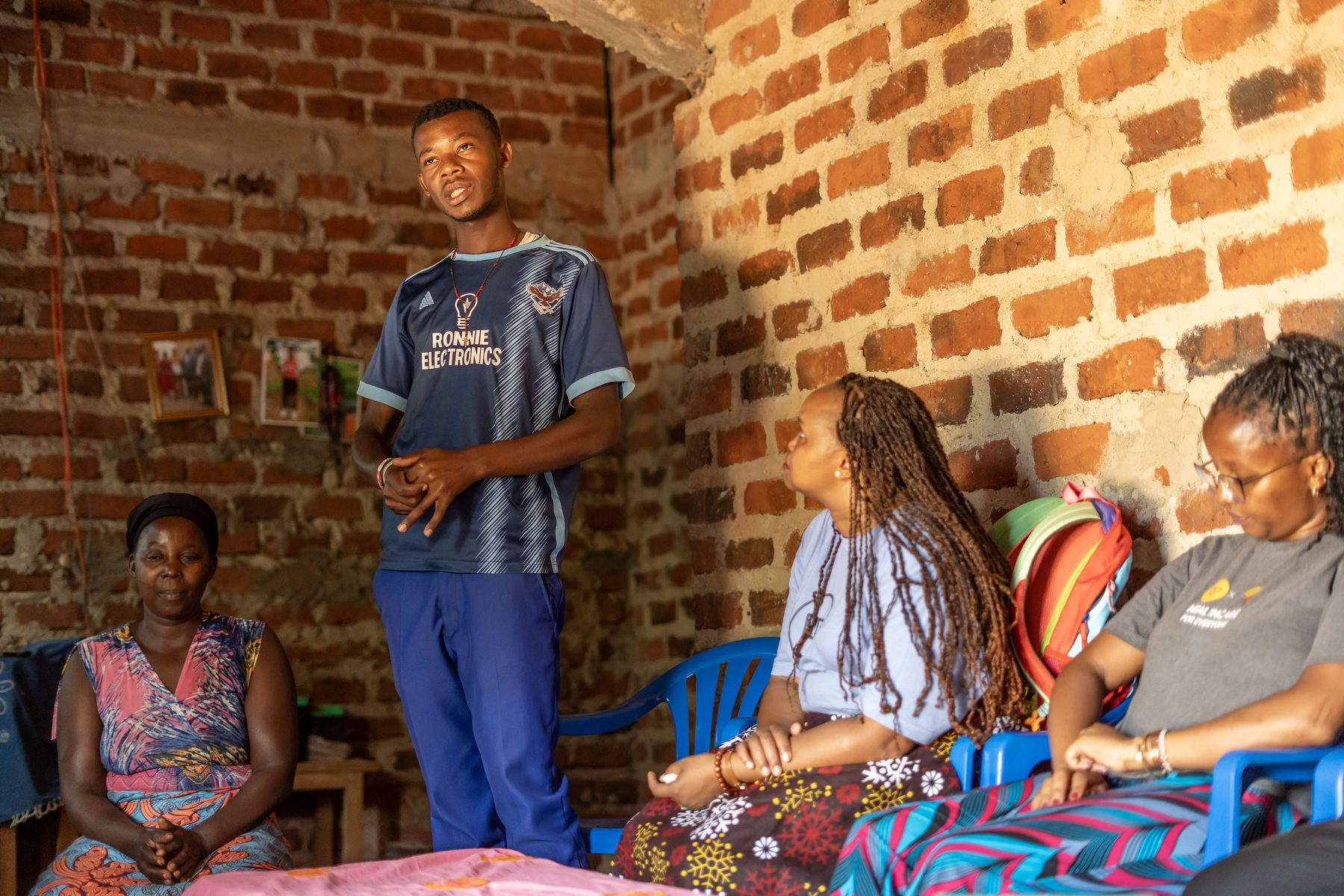
One production day: the new birthing centre in the morning, patient home visits from midday, along a route that runs about 400 km. A local videographer shot video and a local photographer shot stills. The interviews were asked off-camera by people the patients already knew — which is why nobody in the footage looks interviewed.


A Johannesburg production company filmed real families using a reading app at home — families sourced by the in-country partner, never cast. The close detail shots are what makes an appeal video work: hands, screen, the story being read.


Not stock. Not a single trip stretched across a year. Field productions, shot locally, cut by us.
Reach figures are organic, reported by clients or measured on the Are You Happy? channels. Detailed metrics are shared on the call.
Africa is not a location. A shoot in Kilifi and a shoot in Kampala share almost nothing except our process. Here is what we have actually filmed, where, and what it took.
Three separate Kenyan productions in 2026, all with Nairobi-based crews we vetted ourselves. On Earth Day we filmed in Kessup Forest, Elgeyo Marakwet County, for EARTHDAY.ORG: seven interviews including the county governor and the chair of the Kenya Wildlife Service board, more than fifty 4K clips, and drone aerials over the forest and the dry riverbeds — delivered as a mini-documentary plus vertical cuts, one with Swahili voiceover and English captions. In June a Nairobi crew filmed a leadership convening at the Ngong Hills Hotel across two cameras, in English and French, for Search for Common Ground. And in Kilifi County we filmed families reading for Worldreader, plus a deputy minister interview in Swahili and drone coverage of the coast.
For Watsi we filmed a rural health centre in the Gulu region over one production day: the new birthing centre in the morning, patient home visits from midday, along a route that runs roughly 400 km. A local videographer shot video, a local photographer shot stills, and the interviews were asked off-camera by people the patients already knew, which is why nobody in the footage looks like they are being interviewed. Shot RAW and graded by our editors so the whole batch matches.
Two 2026 productions for Worldreader with two different South African production companies: Johannesburg in April, filming real families in the townships using a reading app at home, and Cape Town in May with a two-body Canon set-up, starting at the partner office for b-roll and an interview before moving to families clustered close together to keep travel out of the shoot day. Families are sourced by the in-country partner, never cast.
We travelled with Heifer International for a content trip in November 2025, working alongside their team on programme coverage. For Nigerian productions since, the model is the standard one: a vetted local videographer, our producer on the brief, our editors on the cut.
Humanitarian field footage for Baitulmaal, briefed at the end of March 2026 and coordinated over a WhatsApp group with the crew. Footage was confirmed received and in the client's own editor's hands within three days of the shoot. Where an organisation has in-house post, we are happy to be the field half only.
Ghana: an interview series filmed around an international sea-turtle symposium for SEE Turtles, including researchers from Togo, the DRC and Congo-Brazzaville. Elsewhere our videographer network covers Tanzania, Rwanda, Ethiopia, Senegal, Zambia, Malawi and Zimbabwe — tell us the country and we will tell you honestly whether we have someone there or need two weeks to source and vet one.
One production day becomes a library. The hero film for the gala, the 45-second cut for the appeal email, twelve verticals for the feed, and the quiet two-minute piece your program officer will send to the funder.
There is no per-video menu on this page on purpose. Every program, country and season is different, so we scope on the call and send a written plan the same day.
One call with our producer. Bring the two or three stories you know you're sitting on and the dates already on your calendar. You'll leave with a written plan for filming in Africa: which stories, which crew, what it takes, and what it costs. If we're not the right fit, we'll tell you on the call.
Locally, almost always. We source and vet a solo videographer or a small crew in the country where your program runs, brief them with a written shot list and a live call, and our producer directs remotely on the day. Our own team travels when a client asks for it, as we did with Heifer International in Nigeria.
Portfolio and reel first, then a video call, then a paid test day if the stakes are high. We look for documentary instincts: patience with interviews, natural light, clean audio, and the judgment to stop filming when someone needs a minute. We keep the ones who deliver and book them again.
Interviews run in the language the subject is most comfortable in: Swahili, French, Hausa, Amharic, English. We work with local translators when needed, and every cut ships with English subtitles and any second language you need. We've delivered Swahili voiceover with English captions and French subtitle versions for East African clients.
Release forms in the subject's language, signed on a phone via QR before the interview. No minors' names or identifying details, ever. Subjects review anything sensitive before it goes live, and your safeguarding policy overrides our defaults.
Most in-country shoots book within two to three weeks of the brief. Footage lands in your shared folder within a few days of the shoot, first cuts follow in about two weeks, and revisions run through a simple review link. If a funder visit or an event is on the calendar, tell us the date and we plan backwards from it.
You do: raw footage and finished films. We keep the right to show the work in our portfolio, with your approval.
Yes. National NGOs, foundations and community organizations in Nairobi, Lagos, Accra, Kampala, Kigali and Johannesburg get the same model: local crew, our producer, our editors, and distribution through the Are You Happy? audience when the story fits. Time zones are our normal.
Absolutely. Send us a link and we'll cut it. If a drive full of unused field footage is your main problem, start with our free first edit at happyproductions.me/footage.
Book a 20-minute consult. We'll map the two or three stories you're sitting on in Africa, tell you exactly what a shoot there takes, and give you a plan you can use whether or not you hire us.
20 minutes · No pitch deck · A written plan either way
P.S. That site visit your team is planning for the first quarter? It's a production day if someone briefs a local videographer now. Let's make it one.
