The Western New York Women's Foundation works to advance the economic security and leadership of women and girls across Western New York. It is a small foundation — six staff — running convenings, grantmaking and advocacy across a multi-county region.
Capture their summit on film with no capacity to spare. The Foundation had three constraints stacked on top of each other: a small team already running five concurrent pathways on event day, no in-house video expertise, and a budget that had to be found before the project could even start. Their board had made clear the day needed to be documented properly.
We moved from strategy to shoot day in about two weeks once funding was confirmed, planning the interview list up front so nothing depended on staff availability during the event. The Foundation assigned one volunteer who knew the venue and the people; our videographer worked the room with her, then kept going independently through the breakout sessions, capturing emerging leaders and male allies who were never on the original shot list. Every deliverable came back with clear deadlines on both sides, which Suzanne named as the thing that kept the project from falling through the cracks in a week full of competing priorities.
Five locations and five concurrent pathways were covered in a single day by one crew member, with a far wider range of voices than the plan called for. The Foundation's team spent the day running their event rather than managing a production. “Sometimes you have to spend money to make money,” Suzanne said, “and the capacity that you all filled for us was really tremendous.” She has since been passing our number around her board, who sit on multiple nonprofit boards of their own.
The Western New York Women's Foundation runs on six people. On the day of their summit, those six staff were spread across five concurrent pathways in five different locations, with a room full of leaders they needed to talk to and no one to spare.
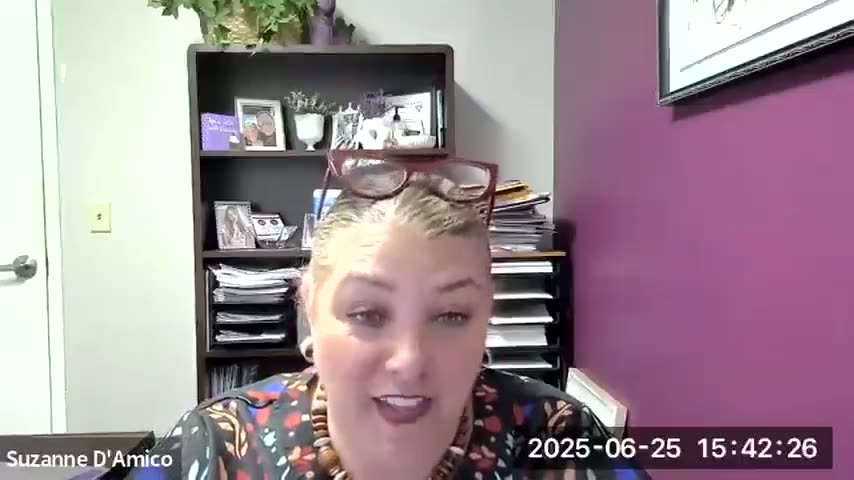
Their board had told them the day needed to be on film. That left Suzanne D'Amico, their lead on the project, with two problems: nobody on staff had the expertise to produce the kind of video they wanted, and the money had to be found before anything could start. “It took us a while to figure out on our end if we were going to be able to afford any type of video for the event,” she said, “but we were tasked pretty strongly from our board that we needed to make this happen.” By the time funding was secured, the shoot was roughly two weeks out.
We built the day around one principle: the Foundation would not spend a minute of the event managing us. Suzanne assigned a volunteer who knew the venue, the agenda and the people, and we planned the interview list in advance. Then our videographer worked the room independently — breakout areas, hallways, the emerging leaders and the male allies who weren't on the original list — and came back with far more perspectives than the plan called for.
Her account of the day is the one we're proudest of. “I really saw Nick in the beginning and then I never saw him again,” she said. “I saw him at the end when I was getting in the car.” She spent the day running her event instead of running a production: “I was very impressed with the way that everything sort of happened. I really didn't worry at all.”
The people who commissioned this campaign, on camera and unscripted.
Screens from the feeds this work was made for.
Answer four questions and we'll email you the plan that fits — what we'd film for your programs, how often, and how that compares to an agency or a full-time hire. No sales call required.