Watsi is a healthcare nonprofit that lets donors fund specific patients' medical treatments directly. Donors choose who they help, 100% of the donation goes to care, and every transaction is tracked publicly — the transparency is the product, not a policy page. Its Universal Fund pools recurring gifts so treatments can be funded the moment a patient is approved. Watsi works through partner hospitals and clinics around the world, and is led by executive director Mackinnon Engen, with Sonam Singh as director of marketing and insights.
Watsi came to us with no dedicated video team and no cohesive year-round plan — a handful of one-off videos, and a model that has to be seen to be believed. The brief was not a film. It was capacity: enough story, captured often enough and in enough places, to feed social, email, paid acquisition and donor campaigns continuously, without starting a new production conversation every time marketing needed something.
We structured the engagement as a standing partnership rather than a project list: scheduled production days, unlimited rounds of edits, and a shared channel where cuts get reviewed in hours instead of weeks. That last part matters more than it sounds. Ahead of a conference keynote, Watsi had seven videos in active revision inside a single week — the kind of turnaround that is impossible when every change is a change order.
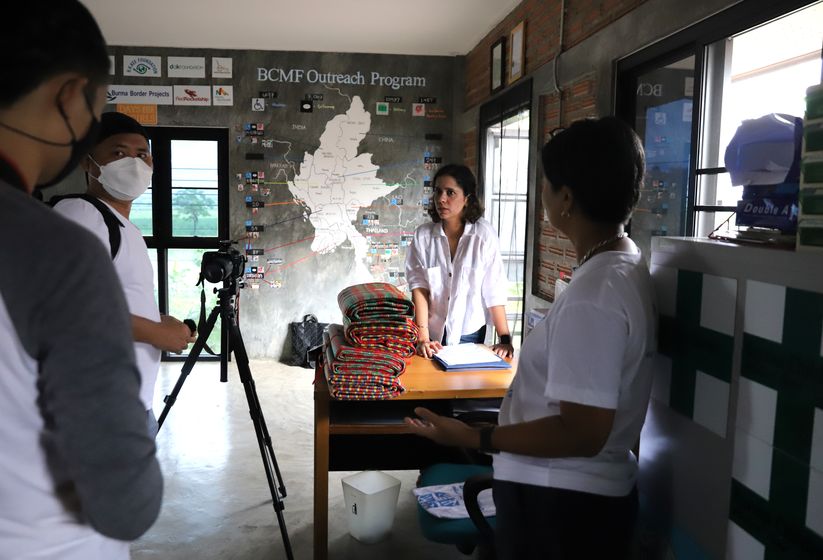
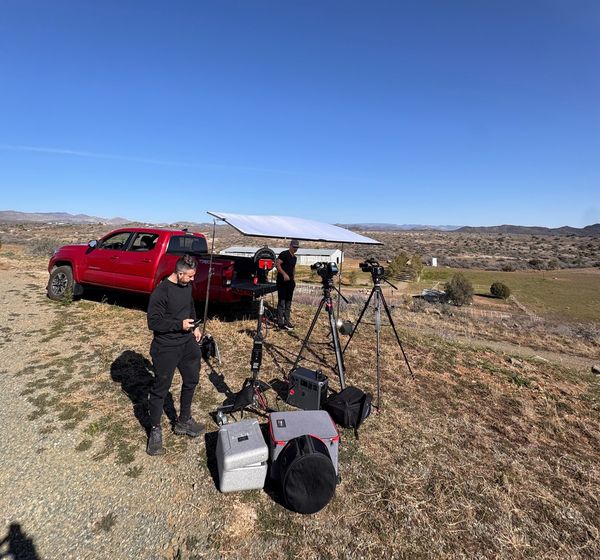
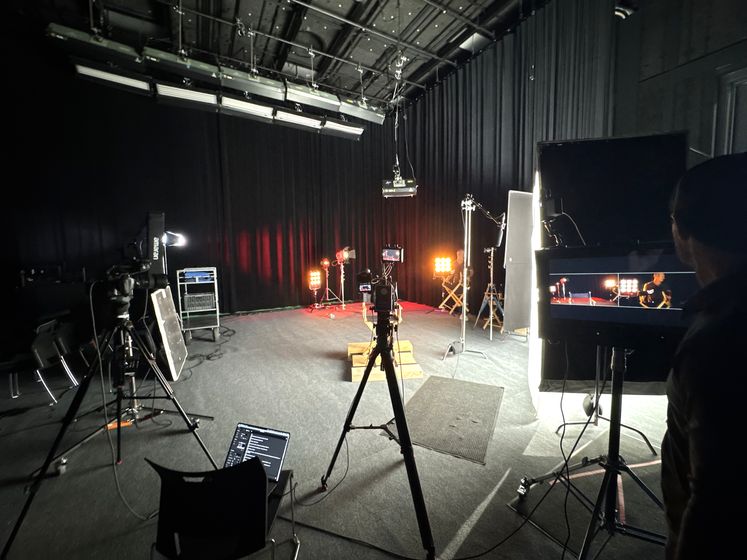
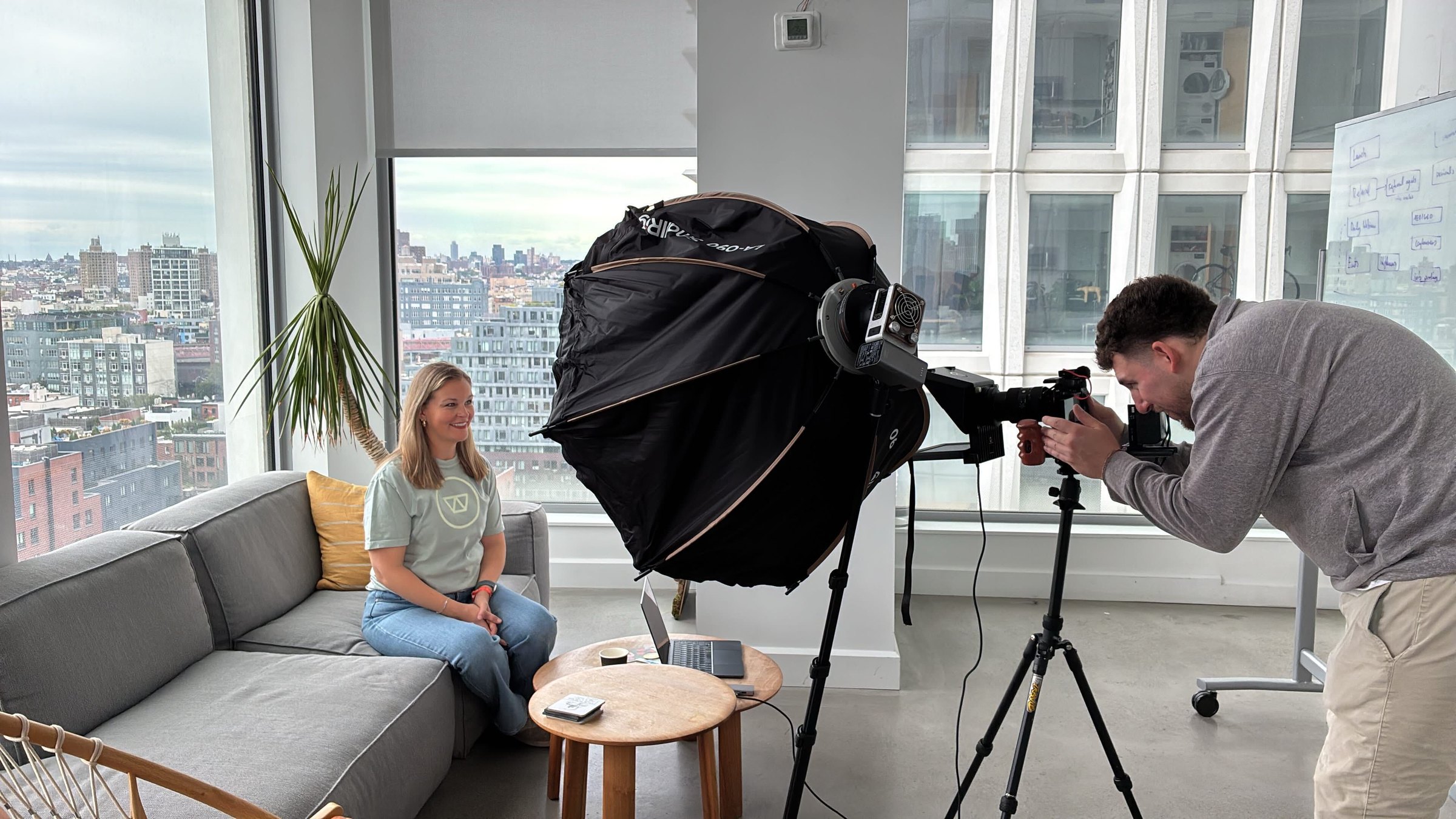
On the production side we shot where the work happens: a partner hospital in Cambodia, a new birthing centre in the Gulu region of northern Uganda, a clinic in Medellín, and a two-location day in New York across Williamsburg and Bryant Park. In Uganda, Watsi's own staff ran the interviews off-camera so patients were speaking to people they already knew. In Medellín we ran a teleprompter build for scripted pieces in the morning and open story interviews in the afternoon, so a single travel day produced both the controlled explainers and the unguarded material.
Everything cuts back into one library. Patient stories, partner and doctor interviews, FAQ and explainer sets, the donor-voice campaign, short-form series on a weekly cadence, and a set of direct-response films built specifically for paid acquisition across Meta and Google — all drawn from the same footage, so the cost of the next campaign is editorial rather than logistical.
Watsi now has a continuous film library rather than a video budget. Four countries, five production trips, and a catalogue deep enough that a new campaign starts in the edit rather than on a plane — the “Who Gives?” donor set, the Medellín FAQ and explainer series, the patient stories and a bank of direct-response cuts built for paid acquisition all came out of footage that already existed.
The partnership is ongoing, with the next production block returning to Medellín alongside Watsi's board and advisors.
Watsi does something most nonprofits only describe: a donor funds one named patient's treatment, and can follow exactly where the money went. Every dollar reaches care. The model is the entire pitch — and it is almost impossible to convey in a still image and a paragraph of copy.
When we started, Watsi had no dedicated video team and no year-round plan. What they had was a story that only lands when you can see it: a patient, a hospital, an operation that happened because a stranger they will never meet clicked something.
So we stopped thinking in videos and started keeping a camera on the organisation. Cambodia first. Then a new birthing centre in the Gulu region of northern Uganda, where the interviews were conducted off-camera by Watsi's own staff so patients were talking to people they already trusted rather than to a crew. Then a clinic in Medellín. Then New York. Each trip fed a library rather than a deliverable, and the campaigns get cut from the library.
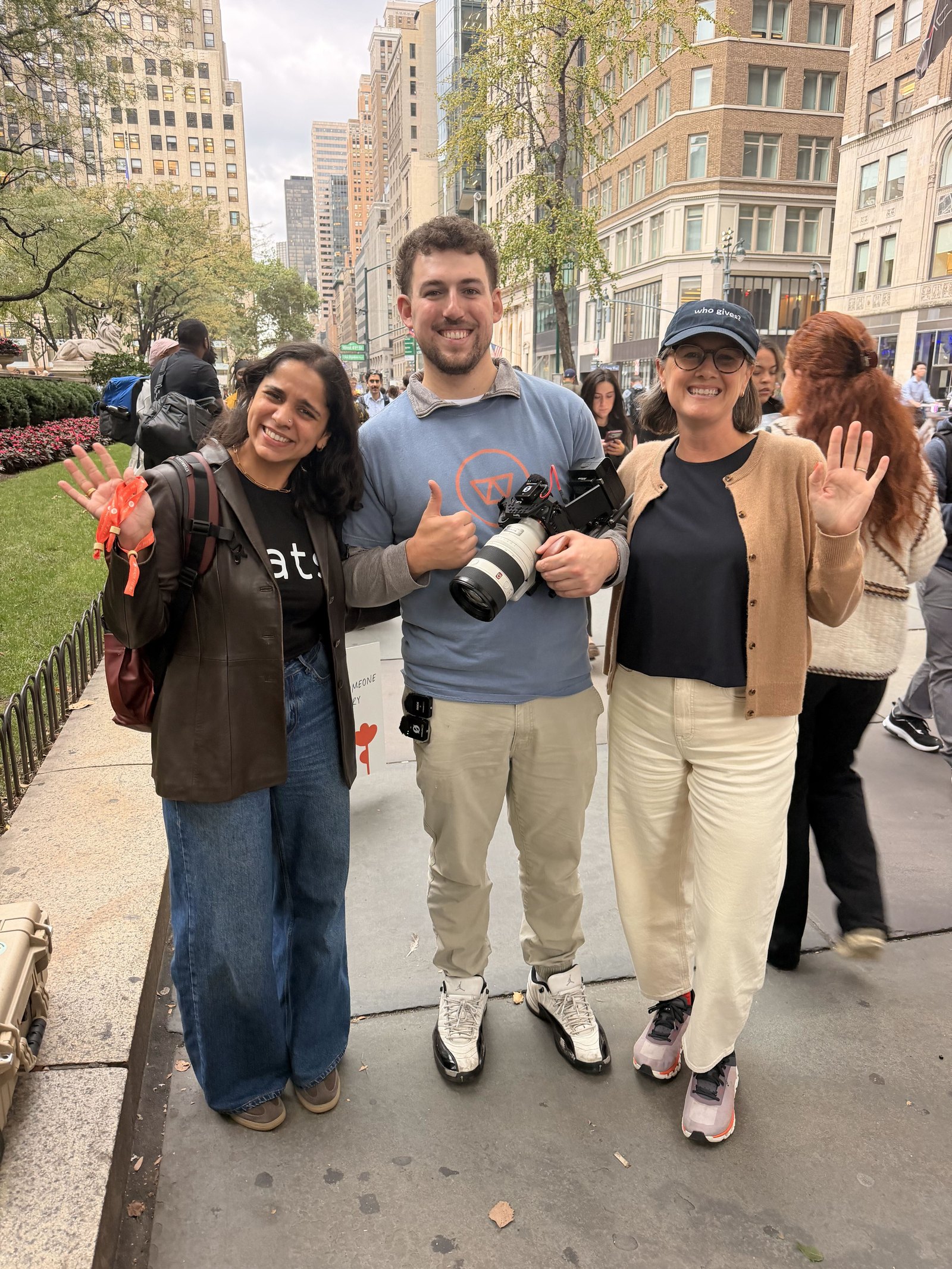
The clearest example is “Who Gives?” — a summer campaign built entirely out of donor voices. No music, no grading, no cleaning up the room tone; just the donors' own audio and a ring of faces that pushes into whoever is speaking. It ran from a launch email through to a folding table in Bryant Park during UNGA week, where Watsi asked passing New Yorkers the same question the campaign asks its donors: would you help someone you have never met?
The people who commissioned this campaign, on camera and unscripted.
Screens from the feeds this work was made for.
Answer four questions and we'll email you the plan that fits — what we'd film for your programs, how often, and how that compares to an agency or a full-time hire. No sales call required.