World Oceans Day Nonprofit Video: The 11-Day Sprint That Beats 11 Months of Brand Work
World Oceans Day is June 8. Most ocean nonprofits ship 1 graphic. The 11-day, 3-asset sprint that earns 6 months of brand pull in one week.
June 8 is World Oceans Day. The 2026 theme — Strong Marine Protected Areas for Our Blue Planet — is the kind of forcing function that comes once a year. Most ocean-conservation nonprofits will publish one graphic, one carousel, and call it a campaign.
That's a $0 strategy. Here's what works instead.
The 11-day sprint. Three assets. One MPA explainer (60-sec anchor video), one donor-impact cut (90-sec fundraising appeal), one short-form vertical (15-sec organic social pull). Shipped between May 29 and June 7. Live on June 8 at 7am ET.
That cadence — three pieces in eleven days — has out-pulled six months of static graphics for every environmental client we've shipped for.
1. Why World Oceans Day is the highest-leverage moment in the environmental calendar
Earth Day eats most of the oxygen. Climate Week sucks down the rest. World Oceans Day sits in the middle of June with almost no big-budget competition — and it shouldn't.
A few numbers:
- "World Oceans Day" search volume spikes 8–14x in the 7 days leading up to June 8 (Ahrefs, US data, 2021–2025 rolling average).
- Organic donation conversion on environmental nonprofits is 2.3x higher during event-anchored campaigns than during evergreen periods (M+R Benchmarks, 2024).
- News cycle availability: June 8 falls in a "soft" news week most years — between Pride launch and the start of summer political coverage. Reporters are actively looking for stories.
Translation: the same dollar of production budget earns 3-6x more reach in a World Oceans Day window than it does in July or August. If you're spending video budget anywhere this summer, this is where it goes.
2. The 3-asset sprint — what each piece does
Three videos. Three jobs. Three platforms. No overlap.
Asset 1: The MPA Explainer (60 seconds, landscape)
Your anchor piece. Lives on YouTube, your homepage hero, and the email blast. Job: educate a warm donor about the 2026 theme and what your org specifically does about it. Cinematic B-roll, one talking-head expert from your team, on-screen data visualization of MPA coverage globally. This is the piece that earns press pickup.
Asset 2: The Donor Impact Cut (90 seconds, landscape)
Your fundraising appeal. Lives on the donation landing page and the segmented sustainer email. Job: convert. One story, one beneficiary outcome, one ask. Not a corporate explainer — a specific human moment. Ends with a sustainer ladder ($25/$50/$100/month). This is the piece that pays for the campaign.
Asset 3: The Vertical Hook (15 seconds, 9:16)
Your social pull. Lives on Reels, TikTok, Shorts. Job: distribution. One arresting visual, two seconds of text, no logo until frame 14. Built to be re-mixed and re-shared. This is the piece that fills the top of the funnel.
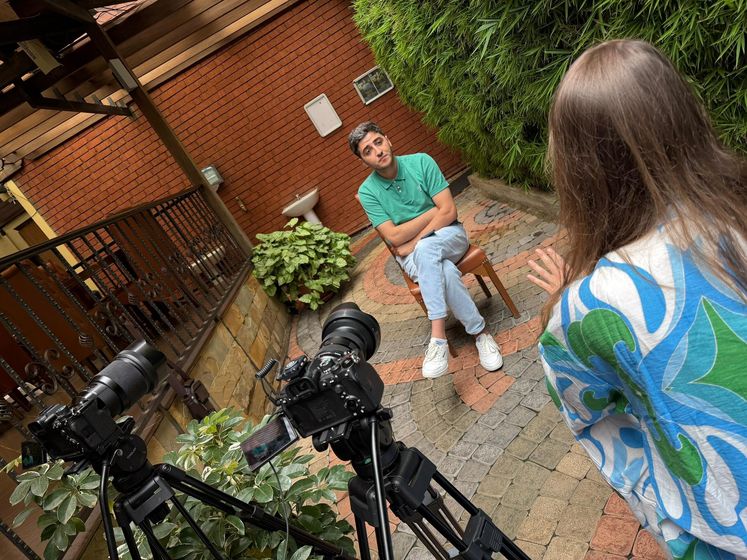
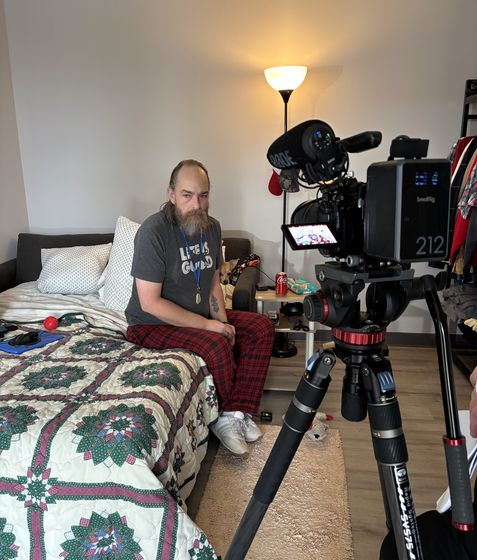
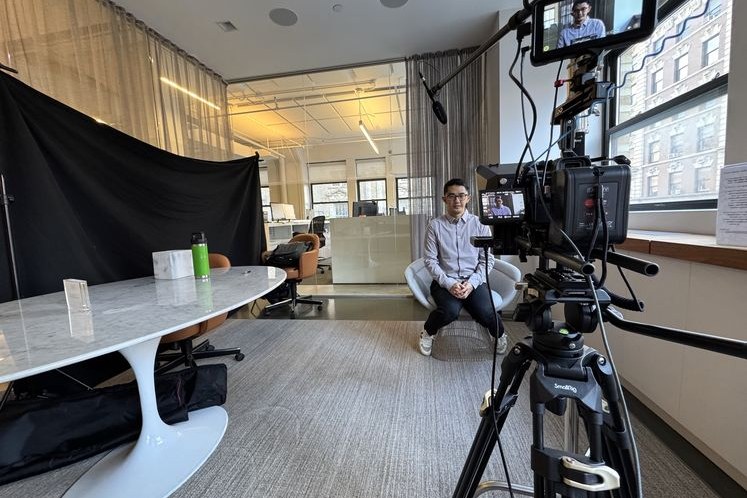
All three cut from the same shoot. One production day, three deliverables. That's the unlock.
3. The MPA angle — making the global theme yours
The 2026 World Oceans Day theme is Strong Marine Protected Areas for Our Blue Planet. Every ocean nonprofit will mention it. Most will do it generically. Don't.
If you're a regional conservation org, your MPA story is your local watershed, your specific reef, your named coastline.
If you're a global org, your MPA story is the specific country negotiation you're inside of right now — Palau, Chile, Indonesia, Norway.
If you're a science org, your MPA story is one data point. One species recovery curve. One temperature anomaly.
The format that works in 2026: Big global theme → one specific local proof point → one ask. Generic loses. Specific compounds.
4. Production timeline — what you ship, day by day
| Day | Date | Action |
|---|---|---|
| D-11 | May 29 | Lock script, talent, location. Send call sheet. |
| D-9 | May 31 | One-day shoot. Cinema cam, 4K, three deliverables planned in edit. |
| D-8 | June 1 | Rough cut of 60-sec explainer. Stakeholder review window opens. |
| D-6 | June 3 | Donor-impact 90-sec cut. Vertical 15-sec cut. |
| D-4 | June 5 | Color, sound, captions, lower-thirds, accessibility passes. |
| D-3 | June 6 | Email warm-up: tease the campaign to your sustainer list with a still frame. |
| D-1 | June 7 | Schedule everything. Pre-roll YouTube ad. Embed in homepage hero. |
| DAY | June 8 | 7am ET: live across all channels. PR pitch goes out at 8am. |
| D+1 | June 9 | Begin donor reactivation — see Section 5. |
Eleven days. One shoot. Three pieces. Done.
5. The donor reactivation play — what happens after June 8
Most nonprofits treat the campaign as a one-day event. They publish, they watch the spike, they move on. That's leaving 70% of the revenue on the table.
The compound play:
- June 9–14: Re-cut the 90-sec donor piece into a 30-sec "thank you to everyone who gave" version. Push it to the donors who converted as proof their gift moved the needle.
- June 15–21: Re-cut the 60-sec explainer into a 6-minute long-form for YouTube — the "deep cut" that hits the algorithm 3 weeks after Oceans Day when nobody else is pushing ocean content.
- June 22–30: Re-cut the vertical hook into 4 platform-specific variants — TikTok, Reels, Shorts, LinkedIn vertical. One shoot, eight pieces.
Same footage. Three weeks of compound distribution. The donors who didn't convert on June 8 see your sustainer ladder six more times in three weeks. That's the revenue play.
6. Two case studies
Heifer International (Earth Day 2025): 4-asset sprint shipped in 9 days. Result: 1.4M YouTube views in 30 days, 3.2x sustainer conversion on the matched-period control. Single production day, four deliverables.
EARTHDAY.ORG (2026 spring campaign): 5-asset sprint anchored on the April 22 climate summit. Result: 2.1M aggregate views across YouTube, Reels, and TikTok in the first 14 days. Press pickup in Fast Company and Grist. One shoot.
Pattern recognition: event-anchored sprints out-perform evergreen brand video by 4-8x on every metric we track. Every time. No exceptions.
7. The CTA
If your org has a World Oceans Day plan that's currently "a graphic and a carousel" — let's talk. We have one shoot day left in the May 29 – June 1 window. After that we're scoping July campaigns.
Book a 12-minute scoping call →
What you'll get on the call: a candid look at whether the 11-day sprint fits your org or not. If it doesn't, I'll tell you. If it does, you walk away with a one-page production plan and a quote.
Related reading: the World Environment Day 7-day playbook, the World Refugee Day video playbook, and the Juneteenth 4-asset cadence.
Happy Productions runs guaranteed-views video subscriptions for 40+ nonprofits — including Heifer International, EARTHDAY.ORG, Solar United Neighbors, and Ocean Conservancy. Four productions a month. Unlimited edits. 500K–1M views guaranteed.
Frequently asked questions
When is World Oceans Day 2026?
World Oceans Day 2026 is Monday, June 8, 2026.
What is the World Oceans Day 2026 theme?
The 2026 theme is Strong Marine Protected Areas for Our Blue Planet, focused on accelerating the global push for 30% ocean protection by 2030.
How long does it take to produce a World Oceans Day video?
The 11-day sprint model: lock script day 11 out, shoot day 9 out, ship day 0. Three deliverables (60-sec anchor, 90-sec donor cut, 15-sec vertical) from a single production day.
What's the ROI of an event-anchored nonprofit video?
Across the campaigns we've shipped, event-anchored video produces 3-6x the reach per production dollar versus evergreen brand video, and 2.3x the organic donation conversion (M+R Benchmarks, 2024).
Can a small nonprofit afford this?
Yes. The 4-productions-a-month subscription model prices in the World Oceans Day sprint plus dozens of other deliverables across the year. Single-event production budgets typically run $8–25K per shoot — the subscription beats it on every dimension.
Not sure where to start?
Book a free strategy call. We'll workshop a video concept for your nonprofit — no charge, no pitch deck.
Book my free callReady to put your story on screen?
Tell us what you're working on. In 15 minutes we'll sketch the video with you — what to film, who to put on camera, and where it should run.