The Memorial Day Donor Video Mistake Every Veteran-Services Nonprofit Makes
Most veteran nonprofits spend their video budget on one Memorial Day film, then go quiet. The 12-month video cadence that earns more from the same budget.
Most veteran-services nonprofits — Folds of Honor, Wounded Warrior Project, Travis Manion, TAPS, Bob Woodruff, Hire Heroes USA, Operation Homefront, Soldier's Angels — pour 60–80% of their annual video budget into a single Memorial Day hero film. They debut it at a gala, push it for a week, and then go dark until the Veterans Day blitz in November.
In between, the donor pipeline starves. Scholarship recipients graduate without ever appearing on camera. Gold Star family stories die in inboxes. Corporate sponsors get the same Memorial Day reel they got last year. Three weeks later, the email open rate has cratered and the major-gift officer is back to PDF case statements.
The fix isn't a bigger Memorial Day film. The fix is a 12-month storytelling cadence — one recipient story, one Gold Star family portrait, one sponsor-activation reel, every single month — at roughly the same budget the org currently spends on the one hero shoot.
This is the playbook. Cluster-linked to our major-gift cultivation video post and our board recruitment video post — both deep-dives on the donor-and-leadership cultivation films most nonprofits never make.
Why the Memorial Day hero film underperforms
The Memorial Day hero film is the most expensive video most veteran-services nonprofits make all year. Six-figure budgets are not uncommon. Drone shots over Arlington. Veteran sit-down interviews. Folded-flag B-roll. Original score. A licensed cover of "Amazing Grace." It is a beautiful piece of work — and it is, structurally, a single point of failure.
Here is what actually happens when that film ships:
- Week of release — Memorial Day Monday and the surrounding weekend. Email open rate spikes. Social engagement is strong. Donations come in.
- Two weeks later — open rate has already dropped 40–60% off the peak. The film is now competing with every other nonprofit's Memorial Day asset in donor inboxes.
- One month later — the film is functionally retired. It doesn't get reshared at the August golf tournament, it doesn't get cut down for the September scholarship announcement, it doesn't get re-edited for the November Veterans Day push because the donor base has already seen it three times.
Meanwhile, between Memorial Day and Veterans Day — roughly 170 days — the org has nothing new to show the donor base. The capacity gap is real. The donor attention loss is real. And every veteran-services nonprofit has the same problem at the same time.
The four storytelling channels every veteran nonprofit underuses
When we audit a veteran-services nonprofit's content calendar, the same four assets are almost always missing — not because the org doesn't have the material, but because the production pipeline can't generate them at the cadence the donor base actually needs.
1. The recipient story (monthly)
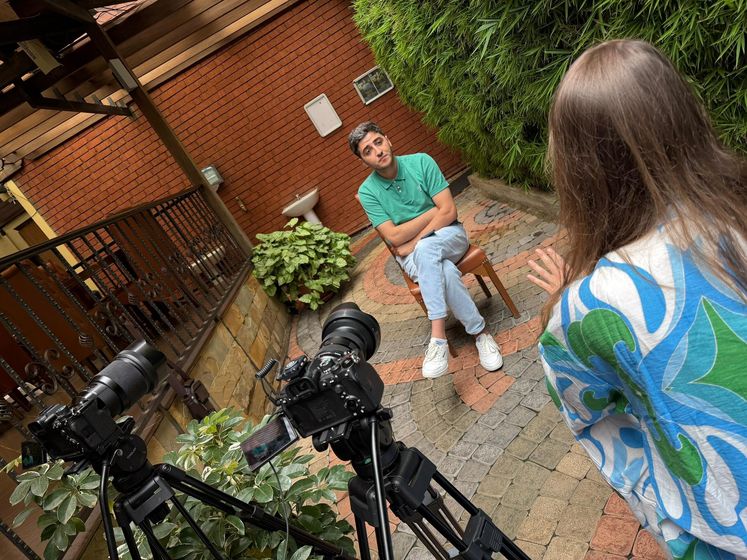
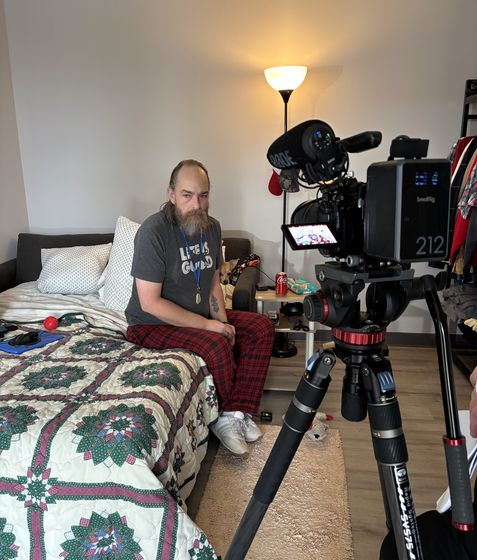
If you award 100, 1,000, or 60,000 scholarships per year, the most underused asset in your entire operation is the 90-second recipient story. Not the long-form recipient interview. Not the gala-keynote testimonial. The 90-second cut — recipient on camera, in their environment, naming one thing the scholarship made possible, with a clear donor-facing thank-you.
This is the asset that closes the loop on a major-donor conversation in week six of a cultivation cycle. It is the asset that converts a $5,000 donor into a $25,000 donor. And it is the asset most orgs only produce two or three times a year because the in-house team is busy editing the Memorial Day film.
The cadence: one recipient story per month, 12 per year. Each one budgeted at roughly one-tenth the cost of the hero Memorial Day film. Same total spend, twelve times the donor-conversation-starting assets.
2. The Gold Star family portrait (quarterly)
Less frequent, more emotionally weighted. A 3–5 minute Gold Star or surviving-spouse family portrait, shot in the family's home or on a meaningful piece of land. Not built around the loss — built around the legacy. What the surviving spouse has done with the scholarship support. What the kids are studying. What the family's relationship with the org has become over five, ten, fifteen years.
These are the films that get screened at the gala. These are the tentpole hero films that close a $250,000 major gift. Most veteran nonprofits produce one or two per year because they're hard. Producing four per year — one per quarter — is the difference between a major-gift program that runs on momentum and one that runs on luck.
3. The sponsor-activation reel (per partner, on signing)
Corporate sponsorship in the veteran-nonprofit space is enormous — QuikTrip, Southern Glazer's, Goldman Sachs, Sedgwick, every major bank and quick-service brand has a veteran-focused giving line. The reel that gets sent to that sponsor's CMO 30 days after the contract is signed — "here is what your dollars did, with your logo and your customers' faces in the cut" — is the single most underproduced asset in the entire sponsorship lifecycle.
Most nonprofits send a PDF impact report. Some send the Memorial Day hero film with the sponsor's logo bug. Almost none send a custom 60-second sponsor-activation reel inside the first quarter. The orgs that do see sponsor renewal rates climb 15–25 percentage points.
4. The micro-cutdown for socials (weekly)
Every long-form story above should generate three to five short cuts — 15-second TikTok, 30-second Instagram Reel, 60-second LinkedIn version — programmed across the year. This is not a separate production. This is what an experienced editor produces from the recipient and Gold Star footage you've already shot.
The orgs that do this turn one shoot day into eight to twelve weeks of social programming. The orgs that don't shoot eight times a year and post twice.
The 12-month cadence (what it actually costs)
Here is the cadence we recommend for any veteran-services nonprofit with a six-figure annual video budget and a Memorial Day spike:
| Month | Primary asset | Secondary cutdowns |
|---|---|---|
| Jan | Recipient story #1 | 4 short-form cuts |
| Feb | Recipient story #2 + Q1 Gold Star family portrait | 6 cuts |
| Mar | Recipient story #3 | 4 cuts |
| Apr | Recipient story #4 + sponsor-activation reels for new Q1 partners | 4 cuts |
| May | Memorial Day hero film + recipient story #5 | 8 cuts |
| Jun | Recipient story #6 + Q2 Gold Star family portrait | 6 cuts |
| Jul | Recipient story #7 + Patriot/Independence Day cutdown of May film | 6 cuts |
| Aug | Recipient story #8 | 4 cuts |
| Sep | Recipient story #9 + Q3 Gold Star family portrait | 6 cuts |
| Oct | Recipient story #10 + sponsor reels for fall renewals | 4 cuts |
| Nov | Veterans Day push: recompose May film + recipient story #11 | 10 cuts |
| Dec | Year-end appeal film + recipient story #12 + Q4 Gold Star portrait | 8 cuts |
That's 12 recipient stories, 4 Gold Star family portraits, 2 tentpole hero films (Memorial Day + Veterans Day), 2–4 sponsor-activation reels, and 70+ short-form cuts. At a true production-subscription rate (4 productions a month + unlimited edits), this lands at roughly the same number most veteran nonprofits already spend on the single Memorial Day shoot.
The structural problem (and why subscription production fixes it)
Most veteran-services nonprofits aren't producing the cadence above because they can't. The in-house comms team has one to three people. The agency that builds the Memorial Day film charges $40,000–$150,000 for that single asset and is structurally incapable of producing twelve $4,000 recipient stories — their cost basis is wrong for it.
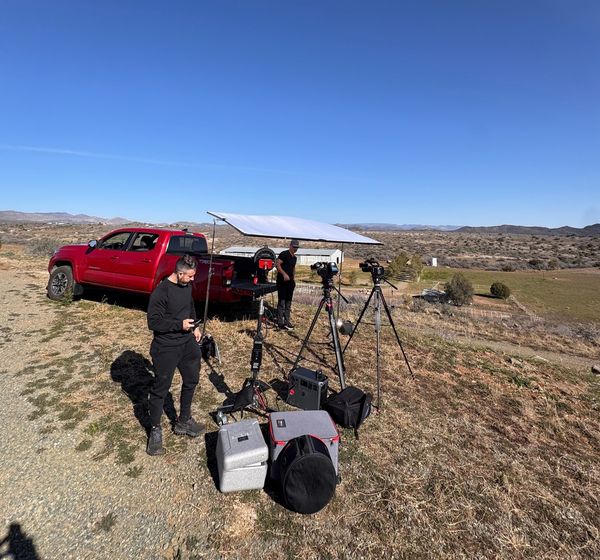
The structural fix is subscription video production: a documentary-trained crew on a fixed monthly retainer, producing four pieces a month with unlimited edits. Same total annual spend as the hero-film approach. Twelve times the donor-touching assets. And — critically — the crew gets better at your story every month, because they're not parachuting in once a year for the Memorial Day shoot.
This is what we do at Happy Productions. Four productions a month, unlimited edits, twelve-month term, $17,500 per year. We work exclusively with nonprofits. Our current roster includes orgs across the veteran-services lane — Soldier's Angels, Navy SEAL Foundation — plus 60+ other nonprofits running the same monthly cadence.
The guarantee: 500,000 to 1 million cumulative views in year one, or we extend the term until you hit it.
The single biggest mistake (one more time)
Do not pour 70% of your video budget into one Memorial Day film and then go quiet for 170 days. Your donor base is conditioned to expect a story from you every month — by every other nonprofit competing for the same dollar. The orgs that win the veteran-services giving share over the next 24 months will not be the ones with the most beautiful Memorial Day film. They will be the ones whose donors saw a new face from the org every single month between Memorial Day and Veterans Day.
If you're running comms at a veteran nonprofit and the May calendar just emptied out — that's the moment to look at June, July, August. Those are the months that make or break the year. Not the one we just finished.
Want the 12-month veteran-nonprofit cadence — built for your org?
Book a 20-minute call with Atdhe. We'll map a 12-month storytelling calendar against your existing donor data and tell you exactly where the gaps are. No pitch unless you ask for one. Book the audit.
Not sure where to start?
Book a free strategy call. We'll workshop a video concept for your nonprofit — no charge, no pitch deck.
Book my free callReady to put your story on screen?
Tell us what you're working on. In 15 minutes we'll sketch the video with you — what to film, who to put on camera, and where it should run.