Pride Month Nonprofit Video: The 30-Day Window That Drives LGBTQ+ Donor Acquisition
Pride Month nonprofit video that actually drives LGBTQ+ donor acquisition. The 30-day production window, 4 mistakes that kill credibility, real examples.
Every June 1, a thousand corporate logos turn rainbow and a thousand donor inboxes hit "delete." The orgs that win Pride Month aren't the loudest — they're the ones whose donors recognize them in May because the relationship was built before the calendar said it was time to care.
That's the entire game. Pride video for nonprofits is not a campaign asset. It's an audience-acquisition machine for the queer-aligned donor base — IF you build the right film and you ship it on the right calendar.
This is the 30-day window we run with nonprofit clients every year. Steal it.
The 30-day production window — what gets built, when
Pride Month is 30 days. Most nonprofits show up on June 1 with one post, one graphic, and a recycled donation page. The orgs that 5x their queer-donor acquisition during Pride run a three-asset stack on a defined calendar:
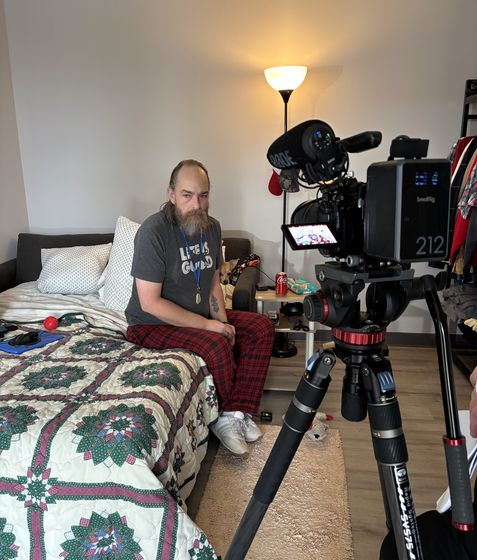
Days -14 to -7 (mid-May → late May): Anchor film production. One 60-90 second hero piece featuring a real person your org serves or a real staff/board member whose lived experience connects to the mission. Not stock footage. Not corporate B-roll. A face, a name, a thirty-second arc that lands.
Days 1-10 of June: Anchor film drops June 1 across owned channels — email, web hero, social. Layer in cutdowns: 30-second vertical for Reels/TikTok, 15-second for Stories, still-frame quote cards for LinkedIn.
Days 15-30 of June: Mid-month, ship the second film — a behind-the-scenes or program-impact piece that converts the awareness from week 1 into a donation ask. This is where Pride budgets earn their keep. The first film built audience. The second film monetizes it.
That's the calendar. Skip a phase, lose 60% of the lift.
The 4 mistakes that kill credibility in 30 seconds flat
We've reviewed hundreds of Pride videos for nonprofit clients. These four mistakes are nearly universal — and viewers spot them inside the first half-minute.
1. Rainbow without representation. Your color palette went queer for the month but your staff and board are not. Donors clock this instantly. The fix isn't a tokenized cameo — it's centering the film on a real LGBTQ+ person whose story belongs in your mission. If you don't have that person on staff, in your program, or on your board, you don't have a Pride video. You have a Pride graphic. Ship the graphic, skip the film, and start recruiting.
2. Borrowed language. "Love is love." "We see you." "All are welcome." These phrases lost meaning a decade ago. Replace them with a specific claim about what your org actually does for LGBTQ+ people — housing, mental-health access, legal aid, youth programming, family-of-origin support. Specifics convert. Slogans don't.
3. Production value mismatch. A nonprofit serving unhoused queer youth that ships a glossy commercial-style film with drone shots reads as performative. A nonprofit with a $50M budget that ships a phone-camera video reads as cheap. The video should look as expensive as your annual report. Not more, not less.
4. No second ask. The hero film opens with a story and closes with "learn more." That's a soft ask in a month when donors expect hard ones. Pair the anchor video with a follow-up film by mid-month that gives donors a specific dollar number tied to a specific outcome ($50 funds one night of shelter for an LGBTQ+ youth experiencing homelessness — not "your gift helps us continue our mission").
The corporate-partnership angle most nonprofits miss
Pride Month is the one month of the year when corporate marketing teams are actively hunting for nonprofit partners to feature. Most nonprofits wait to be approached. The orgs that win send a Pride video portfolio to their corporate development list on May 15 — a 60-second sizzle showing the nonprofit's program work + the storytelling capacity. Suddenly your nonprofit is the easiest "yes" on a marketing director's desk. The film became the pitch deck.
We've seen this play return $40K+ in same-month corporate sponsorships for clients who ran the calendar properly. The math: one $4K-$8K production cost, one well-built portfolio email, $40K back. That's a 5-10x return inside 30 days.
Why the window matters more than the budget
Most nonprofits ask the wrong question: "How much should we spend on Pride video?" The right question is "When do we start?"
A $3,500 phone-shot film ready May 25 will outperform a $35,000 cinematic piece ready June 12 every single time. The calendar is the asset. Production value is the multiplier. Build to the calendar first, scale the production second.
The 30 days around Pride Month are the highest-yield window for queer-donor acquisition all year. The orgs that compound here are the ones donors recognize the following May — before the rainbow logos come out.
What to do if you're reading this in late May
You have a week. That's enough.
- Pick one person whose story belongs at the center.
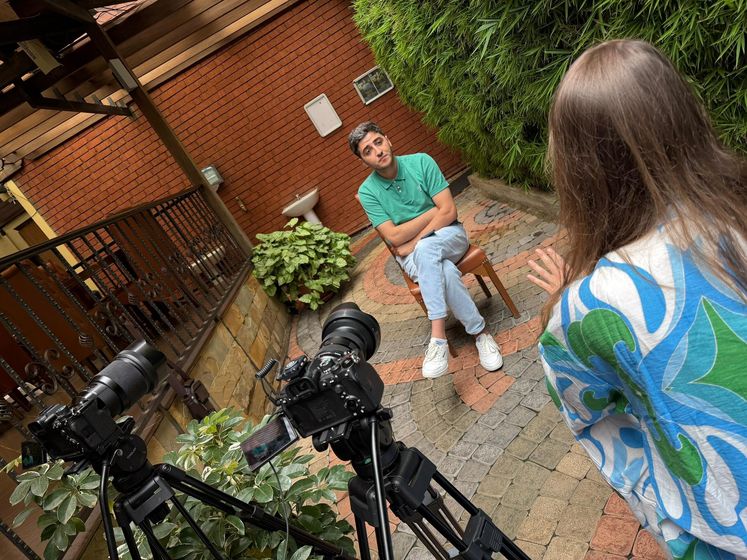
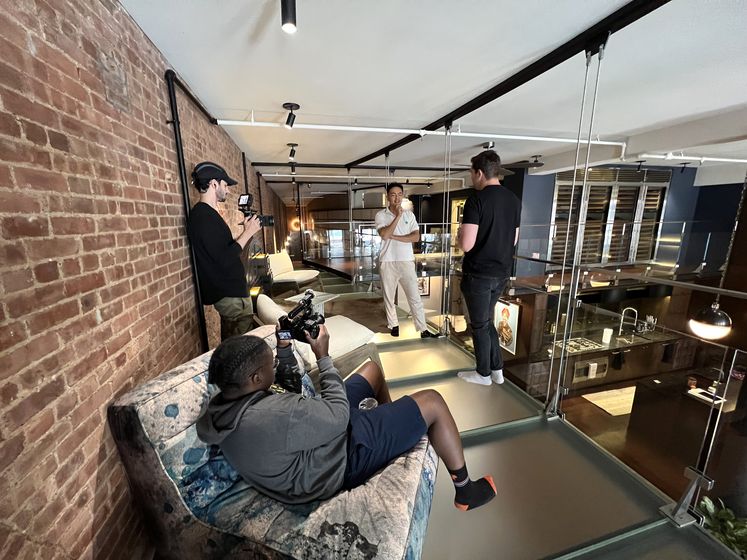
- Plan a 90-minute interview shoot, two camera angles, lavalier audio. That's the entire production day.
- Edit a 60-90 second hero piece + a 30-second cutdown.
- Schedule the hero film for June 1 morning, the cutdown for June 3, the mid-month follow-up for June 15.
Ship that. Then ship the second film by June 15 with a specific donation ask. That's the floor — and the floor outperforms 80% of what gets published in June.
If you're staring at a blank June calendar and need a model for how seasonal-identity-month videos compound — the Memorial Day cadence for veteran nonprofits runs the same playbook on a different calendar.
How Happy Productions runs this for nonprofits
We've produced Pride and identity-month videos for nonprofits whose donor bases skew younger and more values-aligned. The playbook is the same every time: real people, specific claims, production value matched to the org, a hero film and a follow-up film inside 30 days, and a corporate-partnership portfolio sent before the month starts.
If you're staring at a blank June calendar and need this built in the next 10 days, that's the entire reason we exist. Book a 15-minute call and we'll tell you what's possible inside your window.
Not sure where to start?
Book a free strategy call. We'll workshop a video concept for your nonprofit — no charge, no pitch deck.
Book my free callReady to put your story on screen?
Tell us what you're working on. In 15 minutes we'll sketch the video with you — what to film, who to put on camera, and where it should run.