How to Create a Fundraising Video: Step-by-Step Guide
A complete guide to creating a fundraising video that raises money: brief, story selection, filming, post-production, and distribution. Built for nonprofit teams.
Before You Hire Anyone: Get Clear on These 5 Things
The most expensive mistakes in nonprofit video production happen before the camera rolls. A vague brief, an undefined audience, or a misaligned goal will cost you more in wasted production time and re-edits than the entire production budget. Here's what you need to lock down before you do anything else.
1. Define the single goal
Every fundraising video should have one job. Not "raise awareness and funds and educate donors and recruit volunteers" — one job. Is this video designed to convert first-time donors? Retain existing monthly givers? Cultivate major donors? Recruit corporate sponsors? The answer determines everything: length, tone, call-to-action, distribution channel, and success metric. A video trying to do all four will do none of them well.
2. Identify your primary audience
A fundraising video aimed at first-time online donors under 40 looks nothing like a video designed for major donor cultivation over dinner. Audience determines platform (Instagram vs. Vimeo email embed), tone (energetic vs. reflective), and pacing (fast cuts vs. documentary slow-burn). Write one sentence: "This video is for [specific person] who [specific situation] and needs to believe [specific thing] before they'll give."
3. Choose your distribution channels first
Where the video will live determines how it needs to be shot. Instagram and TikTok require vertical format. Email campaigns need a thumbnail-plus-link approach (most email clients won't autoplay video). Homepage hero videos are typically silent-autoplay. A grant portal video can be longer and more detailed. Know the distribution before production begins — retro-fitting a horizontal film for Instagram reels is expensive and rarely looks right.
4. Set the success metric
How will you know if the video worked? Not "it got a lot of views" — a specific, measurable outcome. Options include: donation conversion rate on the landing page where it's embedded, total donations during the 30-day campaign window, average gift size from video-driven traffic vs. email-only traffic, or email click-through rate with video thumbnail vs. without. One metric per video. You can track more, but there should be one primary north star.
5. Establish the budget range before getting quotes
Production companies need to know your budget range before they can propose a realistic approach. Without a range, they're either over-building (proposing a $15,000 production for a $5,000 budget) or under-building (proposing a minimal approach when you have resources for something more impactful). Share a range — "we have $4,000–$6,000 for this" — and ask what's achievable within it. See our video production pricing guide for realistic numbers by format.
Step 1: Write the Brief
A strong creative brief is a one-to-two page document that covers: the goal, the audience, the distribution plan, the success metric, the budget, the timeline, and any constraints (brand guidelines, content restrictions, compliance requirements). It should also include: examples of videos you like (and why), any key messages that must be included, and any messages that must be avoided.
A brief this specific does three things: it filters out production companies that aren't a good fit, it aligns your internal stakeholders before you hire anyone, and it gives your chosen production company the context they need to produce something genuinely effective rather than generically acceptable.
Step 2: Find the Right Story and Subject
The heart of any fundraising video is its protagonist — the person or community whose story makes the mission tangible. Choosing the right subject is a creative and strategic decision that often determines whether a video raises $10,000 or $100,000.
The best fundraising video subjects share these traits: they're willing and emotionally available (not performing or reciting answers), their story has a clear before/after narrative arc, and their experience is specific enough to feel real but representative enough to apply broadly. A story about "families experiencing food insecurity" is abstract. A story about Maria, a 42-year-old teacher working two jobs who still can't afford groceries at the end of the month, is real.
Identify two to three potential subjects before committing to one. Conduct a brief pre-interview (phone or video call) to assess comfort on camera and narrative clarity. The best-looking person on camera is rarely the best storyteller — prioritize authenticity and story over visual appeal.
Step 3: Scout the Location
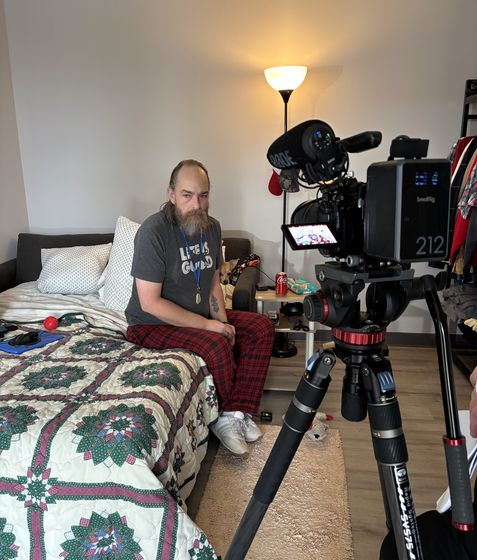
Location does more work in a fundraising video than most nonprofits realize. A kitchen, a home, a school, a clinic — the setting communicates context instantly and without narration. The best locations are places where the story actually happened, not studios dressed to look like them. Authenticity reads.
Pre-production location scouting checklist: natural light available (windows, daylight), minimal background noise (avoid busy roads, HVAC units, open-plan offices), visual context that supports the story (a child's bedroom for a youth-focused organization, a community garden for an environmental nonprofit), and enough space for a small crew to work.
Step 4: Script the Structure (Not Every Word)
The biggest mistake nonprofits make in pre-production is over-scripting. A subject reading from a teleprompter or memorized script sounds scripted — which destroys the authenticity that makes fundraising video effective.
The better approach: script the structure, not the words. Write the arc (where we start emotionally, the moments of change, where we end) and prepare questions to guide the interview conversation toward those moments. Then let the subject speak in their own voice. Your editor will find the moments that match your structure in the interview footage.
The parts of the video that DO need scripting: the narrator's voice-over (if any), any title cards, and the call-to-action at the end. These should be written, refined, and locked before the shoot day.
Step 5: The Shoot Day
For most nonprofit impact stories, a half-day to full-day shoot is standard. A two-person crew (camera operator plus sound) is the minimum viable setup for quality interview footage. What to plan for:
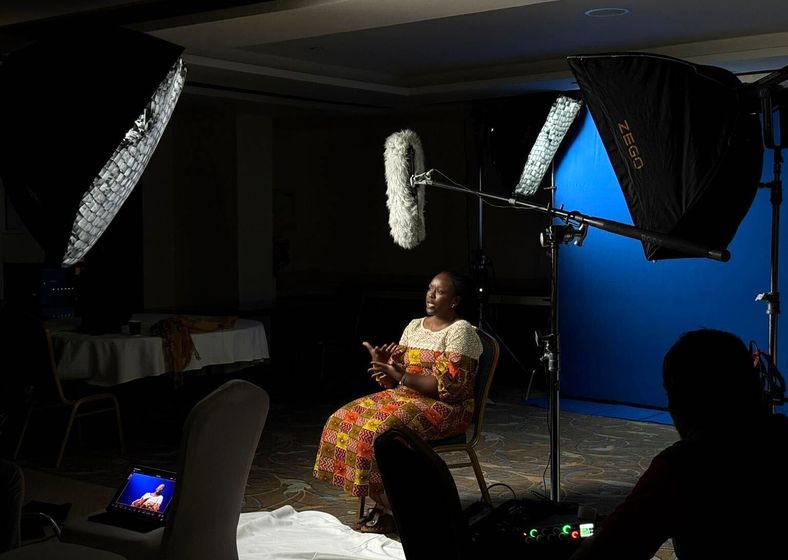
Setup time: Allow 30–45 minutes before filming begins for equipment setup, lighting, and sound checks. The subject should not be present during technical setup — sitting under bright lights while crew fiddles with equipment is anxiety-inducing and produces stiff performances.
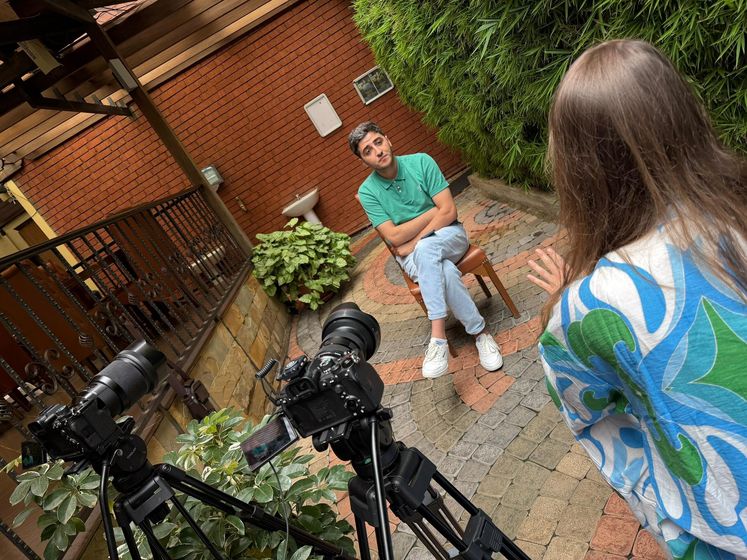
The interview: Conduct the interview as a conversation, not a Q&A session. The person asking questions should not be on camera. Warm up with easy, non-mission-related questions for 5–10 minutes before moving into the core narrative. Never ask yes/no questions — everything should be open-ended.
B-roll: Plan 1–2 hours for filming supporting footage (daily activities, hands, environment, candid moments). B-roll is what gives editors flexibility to build the story from interview excerpts. Shoot more than you think you need.
Step 6: Post-Production
A standard nonprofit impact video (2–3 minutes) takes 2–3 weeks of post-production. The typical workflow: rough cut (editor's interpretation of the story from raw footage) → feedback → fine cut → color correction + audio mix → music addition → title cards + graphics → final delivery.
Common post-production mistakes to avoid: waiting too long to share the rough cut (the longer you wait, the harder it is to make structural changes), providing conflicting feedback from multiple stakeholders without consolidating internally first, and changing the core story direction at the fine cut stage (structural changes at this point essentially require starting over).
Plan for one to two rounds of revisions. Structural changes (reordering sections, adding/removing major interview segments) should happen at the rough cut stage. Fine cut and later is for refinements, not restructuring.
Step 7: Distribution
A fundraising video with no distribution plan is a tree falling in an empty forest. Plan the distribution before production begins, then execute within 48 hours of the final video being approved.
The minimum viable distribution plan for a fundraising video: embed on the campaign donation landing page, include a video thumbnail in the campaign email sequence (at minimum, in email 1 and the final ask email), post to LinkedIn and Instagram (vertical cut), and upload to YouTube with a keyword-optimized title and description. If budget allows, boost the first Instagram post as a paid dark post to a look-alike audience of your existing donors.
Frequently Asked Questions
How long does it take to produce a fundraising video?
From brief to final delivery, plan 6–8 weeks for a professionally produced impact story. The breakdown: 1–2 weeks pre-production (brief, story selection, location scout), 1 filming day, 2–3 weeks post-production, and 1 week for revisions and delivery. Rush projects (2–3 week timeline) are possible but typically cost 20–30% more and limit revision options.
Can we make a good fundraising video with a smartphone?
For social media clips, thank-you videos, and organic Instagram content, yes — a modern iPhone with a clip-on microphone and a simple LED light panel can produce credible content. For a hero fundraising video that will run on your homepage, in email campaigns, or in major donor cultivation, professional production equipment (particularly audio) makes a meaningful quality difference.
What's the most common reason fundraising videos fail?
Organizational-centric storytelling — videos that focus on the nonprofit's history, programs, and achievements rather than on a specific person's experience of change. Donors don't give to organizations; they give to outcomes. A video that leads with "We were founded in 2005 and have served 50,000 families" has already lost most viewers by 30 seconds. Lead with the person, not the org.
How do we find the right video production company for our nonprofit?
Look for three things: experience with mission-driven clients specifically (nonprofit video storytelling is a different discipline from corporate video), evidence of impact (can they share results from previous campaigns?), and a production process that includes genuine creative collaboration (not just execution of your script). Our guide to the best nonprofit video production companies covers what to look for in detail.
Not sure where to start?
Book a free strategy call. We'll workshop a video concept for your nonprofit — no charge, no pitch deck.
Book my free callReady to put your story on screen?
Tell us what you're working on. In 15 minutes we'll sketch the video with you — what to film, who to put on camera, and where it should run.