Capital Campaign Mid-Point Video: The 3-Minute Donor Push That Closes Your Last 30M
The 3-minute mid-campaign video that closes your last $30M. Donor-facing, two-location shoot, deployed by major-gift officers in 1:1 prospect meetings.
You launched the campaign 18 months ago. The anchor donor came in hot. The board got loud. The "We did it!" press release for your $40M lead gift went out, your major-gift officers smashed Q1.
Then the line goes flat.
Every capital campaign has the same shape — explosive start, sleepy middle, a frantic 90-day sprint at the end to hit the goal. The middle is where most campaigns lose 18 months of momentum and three or four 7-figure prospects who quietly drift to the next org's appeal.
The fix is not another email. It's a 3-minute mid-campaign video built specifically for that fatigue moment.
The mid-campaign drift problem
Big campaign goals — $70M for Project WISE, $50M for the new wing, $25M for the endowment match — share an emotional arc. The lead gift fires up everyone for ~90 days. Then the campaign committee shifts to "stewardship mode" and the next-tier prospects ($250K–$2M) start looking at next year's commitment instead of this one.
Here's what's happening inside the donor's head at month 12:
1. They saw the press release for the lead gift. They know the campaign exists.
2. They have NOT seen what's actually happening with the money on the ground.
3. The original case-for-support video (if there even was one) is now 14 months old and shows pre-campaign reality.
4. Their major-gift officer is sending the same impact email every quarter.
5. The donor is asking themselves: "Are they actually executing? Or is this another campaign that'll roll into a Phase III?"
The mid-campaign video is the answer to question #5.
What the asset actually is
Three to four minutes. Donor-facing, not press-facing. Built around three movements:
Movement 1: The math. Show what's been done with the dollars that came in. Not a graphic of "$40M raised, 65% to goal" — that's table-stakes. Show the line going from a planning slide to a real classroom, a real building, a real kid drinking from a real tap. On-screen text only: "$40M committed → 12 schools open → 8,400 students daily." Done. Move on.
Movement 2: The expansion. Show where the next dollar goes. This is the new footage — crews shooting the first 60 days in the three new countries, the first 6 floors of the building rising, the first cohort of the new program walking in. This is what the mid-campaign donor pays to see.
Movement 3: The ask, sized for the prospect tier. Don't end with "donate." End with a specific gift level and a specific outcome. "A $250,000 commitment in 2026 funds one full school cycle — water system, hygiene curriculum, two full years of operations." The donor knows what their seat at the table costs.
Why "3 minutes" is the right length
Major-gift officers don't send 90-second sizzle reels to $250K+ prospects. They send something that lets the prospect stop scrolling, lean forward, and feel the size of what they're being invited into. 90 seconds is too small for that emotional move. 8 minutes is too much for an inbox. Three minutes lands.
We've cut the mid-campaign asset for orgs ranging from $5M campaigns to $100M campaigns. The three-minute mark wins every time.
Where this gets shot
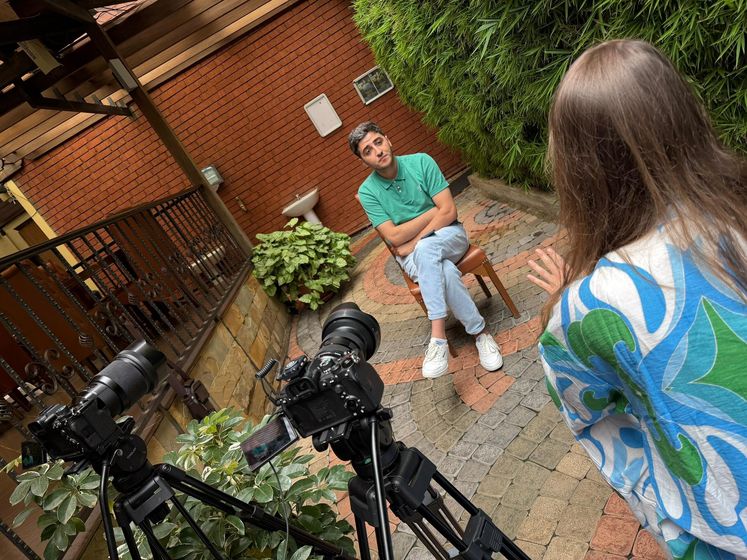
Two locations max. The temptation is to show every site that's getting funded. Resist it. The mid-campaign video gets diluted the second you cross from two strong locations to four mediocre ones.
Pick the location with the biggest emotional jump from baseline:
- If it's an expansion campaign → pick the new market. Field crew. Real kids. Day-in-the-life cuts.
- If it's a building campaign → pick the location with the most visible construction progress. Time-lapse if available. Crane shots. The architect on-camera in 60 seconds, max.
- If it's an endowment match → pick the program that the endowment funds. Two grantees. The director on-camera explaining what the match unlocks.
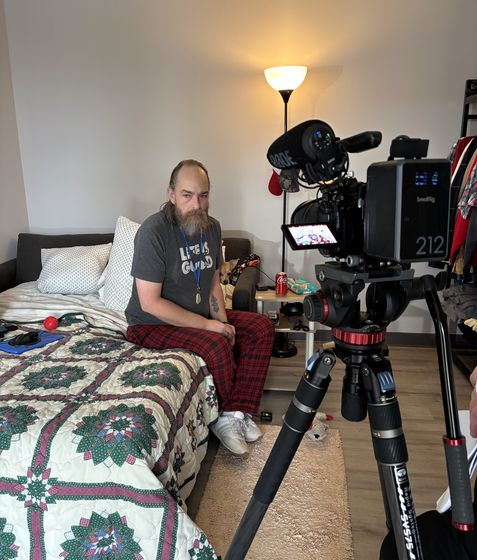
The second location is your testimonial — a beneficiary or a board chair, but only one of them, not both.
What the major-gift officer does with it
Three deployments:
1. The 1:1 pre-meeting send. MGO emails the prospect 48 hours before the in-person ask. "Wanted you to see what's actually happening with the campaign before we sit down." The prospect arrives at the lunch already inside the story.
2. The campaign committee re-engagement. Send to the 15-30 committee members at month 12. They've been quiet. They feel guilty. The video gives them something to forward to their network — which is how the next $5M gets sourced (and the retention math on this committee cohort dwarfs anything you do at the email-list level).
3. The board update. Drop it into the next board packet as a 3-minute embed. Boards do not read 40-page campaign reports. They watch a video.
The framing that makes it close gifts (not just look pretty)
The single biggest mistake we see in mid-campaign videos is leading with the lead donor. The org wants to celebrate the $40M gift. The next-tier prospect doesn't care about the $40M gift — they care about whether their $250K or $1M will matter.
The lead donor gets referenced in 4 seconds of on-screen text. The video itself is built around the gap — the work the next dollar pays for. Specifically the next $30M, the next $15M, the next $5M, the next tier you're actively pitching.
That framing converts. Hero-worshipping the anchor gift does not.
Production economics
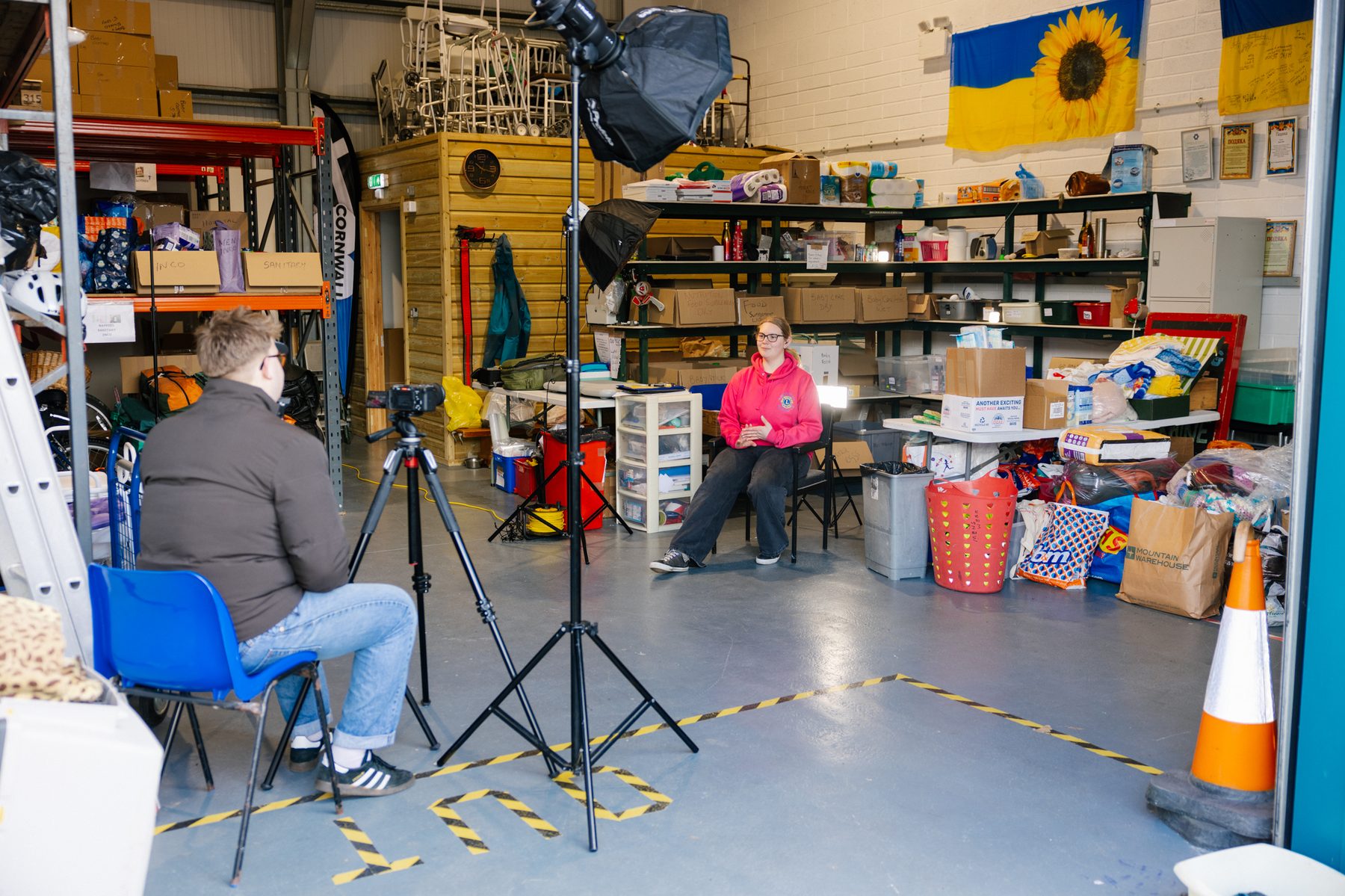
A 3-minute mid-campaign video, two-location shoot, one beneficiary on-camera, one principal on-camera, full cut + 8 short-form derivatives for socials, with the field crew traveling to one international location: between $25K and $45K, all-in, with an established nonprofit video partner. That is not the rate you'll get from a brand agency. That is the rate you should expect from a shop that lives inside the nonprofit category and shoots 80+ productions a year for cause-driven clients.
If the campaign is $70M and you're trying to close the last $30M, the math on a $35K asset is one prospect upgrade away from being trivial.
When to shoot it
Two windows work best:
- Month 12–15 of the campaign — far enough out that early-spend impact is visible, early enough that you have 12+ months to deploy the asset.
- 30 days before your "matching gift" announcement or campaign extension — if you're planning a board-level match or a deadline push, the mid-campaign video is the engine that makes the match credible.
Don't shoot it inside the last 90 days. Too late. Use the late-stage push asset (a separate 60-second urgency cut, structured the way we break it down in the year-end appeal video playbook) instead.
What to bring to the first call
Three things tell us we can hit the budget and the timeline:
1. Current campaign dashboard — total raised, total to goal, tier breakdown.
2. The two locations you'd most want to shoot, and the principals at each.
3. The next major-gift event the asset will deploy at (board meeting, donor dinner, virtual update).
We bring the rest.
Happy Productions has cut mid-campaign video assets for 40+ active nonprofit clients including Lions Clubs International, EARTHDAY.ORG, Worldreader, Solar United Neighbors, Planet Water Foundation, Americans for Immigrant Justice, and Freedom Reads. If your campaign is sitting mid-flight and the last 40% feels heavier than the first 60% did, the asset described above is built for that exact moment. Book a 20-minute call.
Not sure where to start?
Book a free strategy call. We'll workshop a video concept for your nonprofit — no charge, no pitch deck.
Book my free callReady to put your story on screen?
Tell us what you're working on. In 15 minutes we'll sketch the video with you — what to film, who to put on camera, and where it should run.